When parents search Invisalign vs braces for teens, they are often trying to find an option that fits a teenager’s health needs, school routine, and comfort level. Both clear aligners and braces can be part of orthodontic care, but the right choice depends on the individual and the treatment plan—not just which option looks more convenient.
Request a complimentary consultation
At Russell Orthodontics, Invisalign is a central focus of care, and many patients choose it. Still, a comparison is most useful when it looks beyond appearance. A teen’s ability to follow care instructions, the movements needed, and the family’s preferences all matter. This guide explains practical differences and offers questions to bring to an orthodontic consultation.
What is the main difference between Invisalign and braces for teens?
Invisalign uses a series of removable, clear plastic aligners. A patient wears the aligners according to the orthodontist’s instructions and changes to the next set as directed. Braces use brackets attached to the teeth and a wire that the orthodontist adjusts as treatment progresses. Because braces are fixed in place, they stay on the teeth during meals and daily activities. Aligners can be removed for eating, drinking anything besides water, and cleaning teeth.
That difference shapes everyday routines, but it does not tell you which treatment is appropriate. The orthodontist first evaluates the bite, tooth positions, dental development, and treatment goals. The Invisalign for teens page describes the practice’s teen aligner care, while its overview of braces options can help families learn about fixed appliances.
It can help to separate three questions that often get bundled together. First, which appliance can address the teen’s specific orthodontic needs? Second, what daily responsibilities come with that appliance? Third, which routine is a realistic fit for the teen and family? The first question calls for a clinical evaluation. The next two are practical conversations that parents and teens can prepare for together.
Appearance may be one factor, especially if a teen feels self-conscious about orthodontic treatment, but it is only one part of the decision. Think about whether the teen is comfortable managing a removable item, whether the family can support a consistent cleaning routine, and how the appliance will fit meals and activities. A useful comparison is personal: it connects the clinical recommendation to the teenager’s real day.
How do the options compare in a teen’s daily life?
A practical comparison can help families identify the questions that matter to them. These are general differences, not a promise about how a particular teen’s treatment will work. The orthodontist can explain the instructions and plan for the individual case.
| Consideration | Invisalign aligners | Braces |
|---|---|---|
| How the appliance is worn | Removable trays are worn and cared for as directed by the orthodontist. | Brackets and wires remain attached to the teeth during treatment. |
| Meals and snacks | Remove aligners before eating, then clean teeth before putting them back in. | Plan food choices and eating habits around a fixed appliance; follow the orthodontist’s guidance. |
| Oral hygiene | Remove the trays to brush and floss, and clean the aligners as instructed. | Brush and floss carefully around brackets and wires, using the tools or technique recommended by the care team. |
| Responsibility | The teen needs to keep track of removable aligners and follow wear and care instructions. | The appliance stays in place, though the teen still needs to follow hygiene, food, and appointment instructions. |
| Professional follow-up | Check-ins are planned by the orthodontist, who monitors progress and advises what to do next. | Appointments let the orthodontist monitor progress and make adjustments as needed. |
| Suitability | Depends on the teen’s orthodontic needs and whether the plan can be followed as prescribed. | Can be considered when the orthodontist recommends a fixed appliance for the treatment needs. |
Neither column is automatically easier for every family. Some teens appreciate being able to remove aligners for meals and brushing. Others may prefer not to manage a removable appliance. For either option, treatment depends on following the orthodontist’s instructions and attending the recommended follow-up visits.
Consider the table as a starting point, not a scorecard. For instance, a teen who wants to eat without an appliance in place may value removability, while a teen who worries about losing belongings may prefer not to carry a removable tray case. A family should also consider what the orthodontist recommends for the specific bite and tooth positions. A personal preference can guide the conversation, but it does not replace the clinical assessment.
What should parents know about teen responsibility?
With removable aligners, consistency is part of the treatment routine. The teen must wear them as directed, keep them safe when they are out, and remember to put them back in after meals and cleaning. If aligners are often misplaced or left out, the family should discuss that concern honestly before choosing a plan. The orthodontist can explain what is expected and how to handle common disruptions.
Braces do not have to be remembered and reinserted, but they bring their own responsibilities. A teen needs to clean around brackets and wires with care, follow instructions about foods that could damage the appliance, and tell the orthodontic team about problems. Fixed does not mean maintenance-free.
It can help to talk with a teen about school, sports, travel, meals, and home routines before making a decision. Ask who will help keep track of aligners or hygiene supplies, and how the teen feels about the visibility and care of each option. These conversations are not a test of whether a teen is “responsible enough.” They help the orthodontist and family choose a plan that is realistic for that person.
Instead of asking only, “Will you remember?” work through a typical day together. When does the teen eat breakfast? Where does lunch happen? Does the teen move between classrooms, practice after school, and do homework in another room? Which items are already easy to keep track of, such as a phone, sports equipment, or school materials? These details reveal where a routine may need reminders or a reliable storage place.
Parents can support habits without turning every meal into a conflict. Agree on a simple plan: keep the case in the same backpack pocket, make a quick check before leaving a restaurant or cafeteria, and decide who will help if a tray is missing. If the teen is not ready to own every step, discuss whether a parent can provide reminders at first and how responsibility can shift over time. The care team can explain the treatment instructions; families can decide how to make those instructions workable at home.
It is also sensible to plan for less predictable days. A field trip, sleepover, tournament, or day spent away from the usual routine can make it easier to forget an appliance or supplies. Talk through those situations before they arise. For braces, the family can ask what to do if a wire or bracket becomes uncomfortable or damaged. For aligners, ask what steps to take if a tray is misplaced or damaged. Do not improvise a change to the plan; contact the orthodontic team for directions.
How do eating and oral hygiene differ?
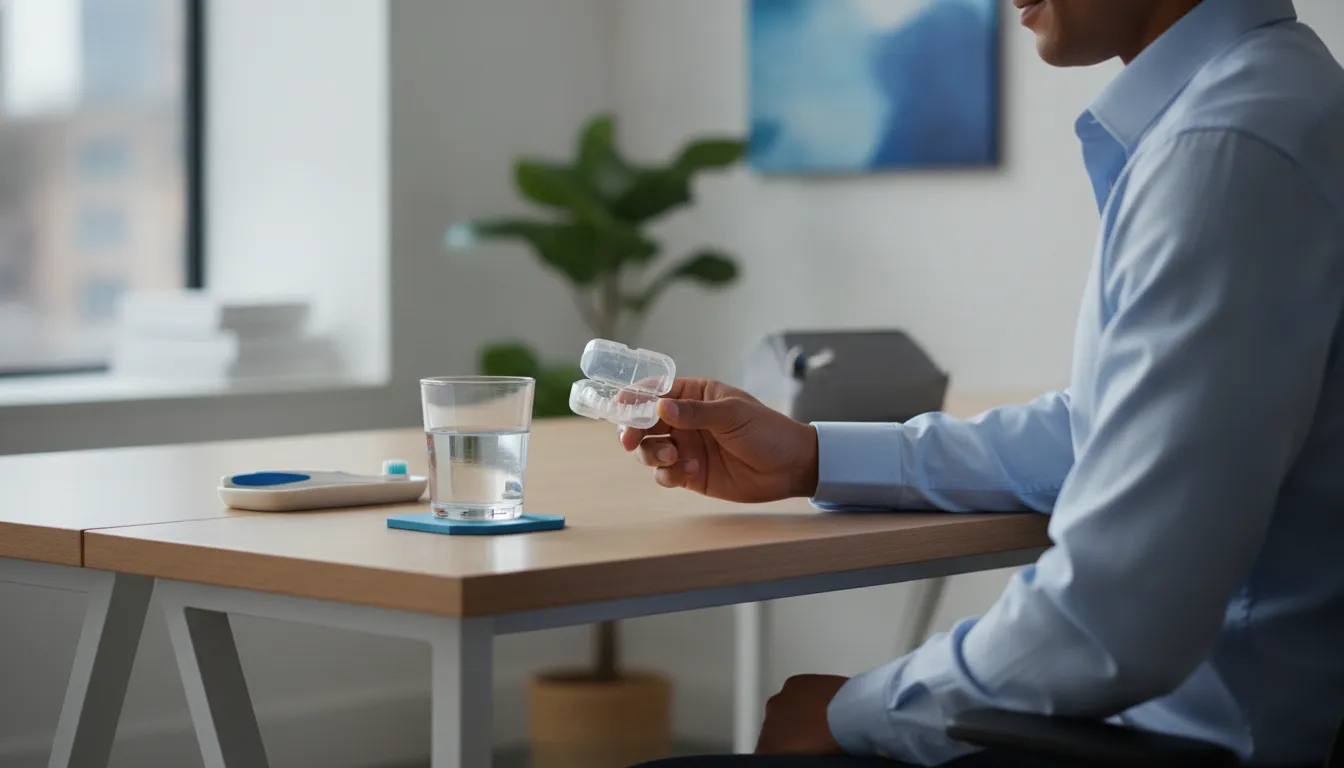
Aligners are removed for meals and for beverages other than water, following the orthodontist’s instructions. After eating, the patient should clean their teeth before replacing the aligners, as directed. That means planning ahead for lunch at school, snacks, and activities away from home. A small case can help keep removable aligners protected when they are not being worn.
With braces, meals do not require removing the appliance, but food can collect around brackets and wires. The orthodontic team can explain which foods to avoid or modify and how to clean around the appliance. Good brushing and flossing matter with either choice; the method differs. For a broader overview of orthodontic treatment options, families can review the practice’s treatment information and then bring questions to a clinician.
Teens who already have a routine for brushing and flossing may find it easier to add appliance care. If the routine is inconsistent, that is worth discussing too. A parent and teen can agree on practical reminders, keep supplies in a backpack, or set aside a regular time to clean the appliance. The orthodontic team can recommend care steps for the specific treatment being considered.
For an aligner routine, families can map the steps without overcomplicating them: remove the trays before a meal, place them in their case rather than wrapping them in a napkin, eat, clean the teeth as instructed, and put the trays back in. A case matters because a loose tray can be easy to overlook or discard accidentally. If a teen has a meal away from home, it helps to know in advance where the case will go and how they will clean their teeth afterward in a way that follows the clinician’s guidance.
For braces, the routine is different. The teen leaves the appliance in place and takes care to brush around brackets and wires. Families can ask the orthodontic team to demonstrate the recommended technique and explain what supplies may help. A mirror and a few extra minutes can make it easier to check that food is not caught around the appliance. If the teen is rushing between school and activities, discuss which parts of the routine can be planned at home and which need to be managed while away.
Neither appliance removes the need for daily attention. The practical question is which routine the teen can understand and repeat. A family may want to write the care steps on a bathroom note or use a phone reminder, but the routine should remain grounded in the orthodontist’s directions. If the teen finds a step difficult, raise it at a visit rather than skipping it or substituting an unapproved method.
How can aligners fit into a school day?
School is one of the best settings in which to test whether a removable appliance routine will feel manageable. A teen may have lunch in a cafeteria, eat a snack between activities, or leave campus for an appointment or event. Before treatment, ask the teen to describe the normal schedule from arrival through dismissal. Include the less obvious moments: a quick snack before practice, a long bus ride, a club meeting, or a lunch period spent talking with friends.
For aligners, the teen needs a consistent approach for meals and tray storage. The parent and teen can decide where the case will stay during the day and what they will do when a meal is unplanned. A tray should not be placed loose in a pocket or wrapped in a napkin; it should be protected as the orthodontist instructs. Families can ask the clinician about cleaning expectations when a sink is not readily available and how to handle a situation where the teen cannot follow the usual routine immediately.
Braces have a different school-day pattern because the appliance stays in place. The teen does not have to remove or store it at lunch, but must be mindful of the care instructions for foods and hygiene. If a teen is concerned about food getting caught or about cleaning at school, ask the orthodontic team for practical advice tailored to the appliance. The goal is not to make school life revolve around treatment; it is to know what small adjustments will help the teen follow the plan.
Social situations deserve a candid conversation, too. A teen might be comfortable discussing treatment with friends, or might prefer to keep details private. There is no single correct response. Parents can ask what feels comfortable and help the teen prepare simple answers to questions, while avoiding pressure to choose an appliance solely to satisfy other people. Comfort, clinical suitability, and the day-to-day routine all belong in the discussion.
In the first weeks of a new routine, use a calm check-in rather than assuming everything is going smoothly. Ask what is easy, what feels awkward, and what the teen keeps forgetting. If an instruction is unclear, contact the orthodontic team. This gives the family a chance to address a practical obstacle early and make the routine more sustainable.
Can teens play sports or participate in activities?
Activities are a useful part of the comparison, but the answer depends on the sport, the appliance, and the orthodontist’s advice. Ask how each option may fit the teen’s sport or instrument, and whether any protective equipment or adjustments are appropriate. Do not assume an appliance can be taken out or modified for an activity without checking with the care team.
For sports, families can ask whether a mouthguard is recommended and how it should fit with the orthodontic appliance. Russell Orthodontics has information about protecting a smile during sports. The orthodontist can clarify what applies to the teen’s specific activity and plan.
For a teen who plays a wind instrument or has a busy schedule, ask about any adjustment period and how to handle practice, performances, or school events. A useful answer should be specific to the teen and their appliance rather than a blanket claim that one choice never affects activities.
Give the orthodontist a complete picture of the schedule. A teen who has regular practices, competitions, rehearsals, or travel may have different planning questions from a teen whose activities mostly take place at home. Families can list the activities and ask what appliance care looks like before, during, and after each one. For example, ask where a removable tray should be kept if it must come out, whether protective equipment is appropriate, and who to contact if an appliance is damaged during an activity.
Instrument practice can also be discussed in concrete terms. Ask whether the teen should expect to make any adjustments while playing and how to handle practice sessions, lessons, and performances. Avoid assuming the answer based on another student’s experience; the orthodontist can respond in light of the individual appliance and treatment plan. This approach keeps the conversation realistic without making unsupported promises about comfort or performance.
Which treatment can address a teen’s orthodontic needs?
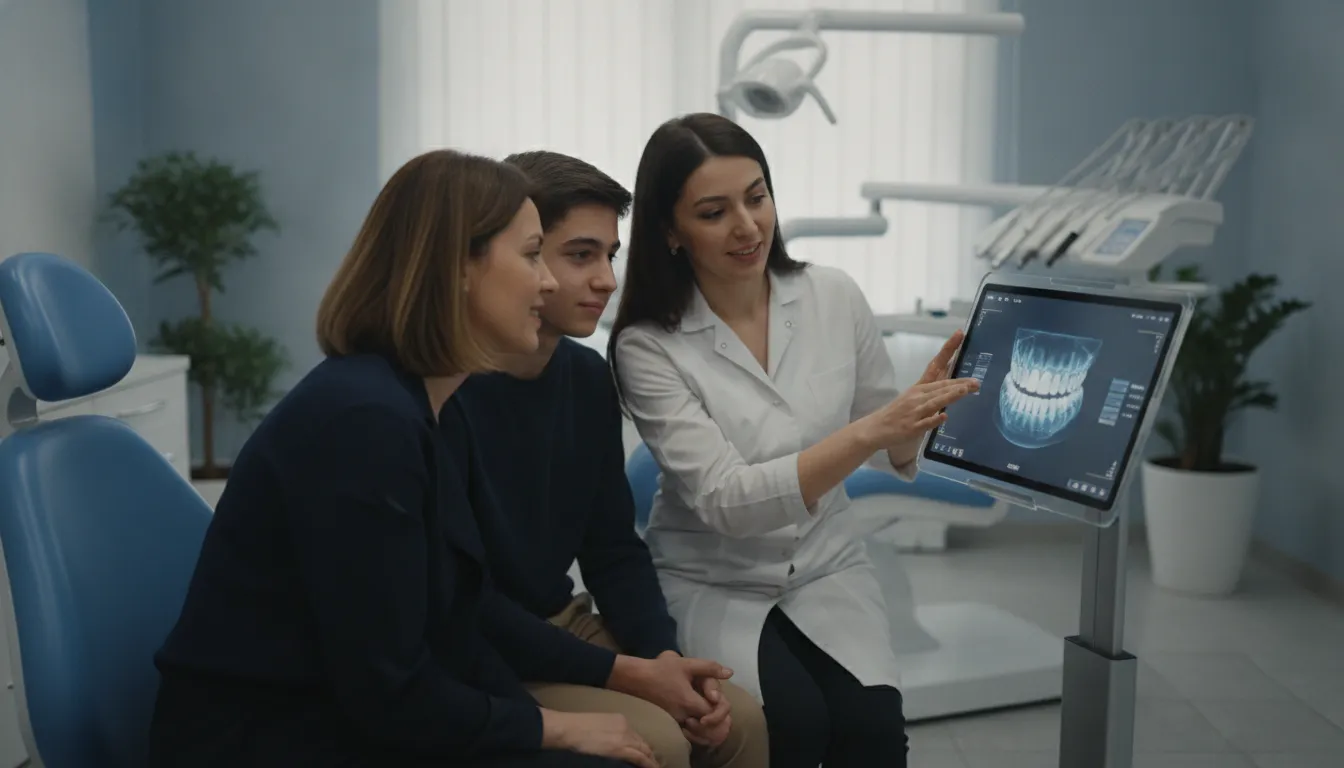
There is no universal answer based on age alone. The orthodontist evaluates the teen’s teeth, bite, stage of dental development, and goals before recommending an approach. Clear aligners can be appropriate for many teens, while some treatment plans may call for braces or another approach. In some cases, the clinician may explain more than one reasonable option. A treatment recommendation should be based on a clinical evaluation, not a general online comparison.
Parents should feel comfortable asking what the orthodontist is trying to correct, why a particular appliance is being recommended, and what factors could change the plan. If aligners are discussed, ask how the teen’s case will be monitored and what to do if a tray is lost or damaged. If braces are discussed, ask about appliance care and what to do if a bracket or wire causes a problem. The practice’s Invisalign FAQ is another place to start for general aligner questions.
Russell Orthodontics focuses strongly on Invisalign. The practice reports that about 95% of its patients choose Invisalign, but that figure is not a recommendation for every teen. The clinician’s evaluation and the family’s priorities still guide an individual treatment conversation. Learn more about Dr. Russell’s Invisalign provider designation and the practice’s approach to orthodontic care.
A thoughtful consultation should explain the purpose of treatment in terms a teen and parent can understand. You can ask the clinician to describe the concerns being addressed, how the proposed appliance fits those goals, and what the family will need to do at home. If there are alternatives, ask what the meaningful differences are for this particular case rather than relying on broad claims about one appliance being simpler or more effective for everyone.
It is also reasonable to ask how progress will be reviewed and when to contact the office between planned appointments. Treatment is supervised by the orthodontic team; online articles cannot determine whether a particular teen is a candidate for a specific appliance. A clear plan for questions and unexpected issues can help parents and teens know where to turn instead of guessing.
How can parents compare options without focusing only on appearance?
It is natural for teens to notice whether an appliance is visible. That concern can be acknowledged without allowing appearance to crowd out other factors. Ask the teen to rank what matters most: visibility, eating routines, cleaning, avoiding removable items, or how the appliance fits school and activities. Then compare those preferences with the orthodontist’s assessment and the daily responsibilities of each option.
Try a simple example. One teen may be comfortable removing an aligner at lunch, carrying its case, and brushing before putting it back in. Another may find that extra sequence stressful and would rather focus on care around a fixed appliance. A third teen may strongly prefer one appearance but need to hear whether that choice fits the treatment goals. These are not conclusions to reach from a checklist alone; they are useful topics for a clinician-led conversation.
Parents can make the discussion less abstract by recording a few ordinary days. Note meals outside the home, sports or rehearsals, travel between school and activities, and the places where hygiene supplies are available. The point is not to find a perfectly predictable schedule. It is to identify the situations that may need planning and ask the orthodontist for specific instructions.
Consider how each family member will take part. A teen may be responsible for daily care, while a parent may arrange visits, keep track of instructions, or help with questions. Agreeing on those roles can prevent a misunderstanding later. The teen should be included in the decision because they will live with the routine; the parent can help make sure the clinical and practical questions are answered.
What questions should parents ask at a consultation?
Bring the teen into the conversation. Their willingness to follow a routine and comfort with an appliance can affect day-to-day experience. Consider taking notes so you can compare answers rather than relying on memory.
- What orthodontic concerns did you identify, and what are the goals of the recommended plan?
- Is Invisalign an option for this teen’s specific needs? If not, what makes another approach more appropriate?
- What daily instructions should the teen follow for wearing, removing, cleaning, or caring for the appliance?
- How should we handle school meals, travel, sports, and other regular activities?
- How often should we expect follow-up visits, and what will happen during them?
- What should we do if an aligner is lost, a bracket becomes loose, or the teen has discomfort?
- What is included in the proposed treatment fee, and what payment or insurance questions should we clarify?
- How will we know whether the plan is progressing as expected, and when should we contact the office?
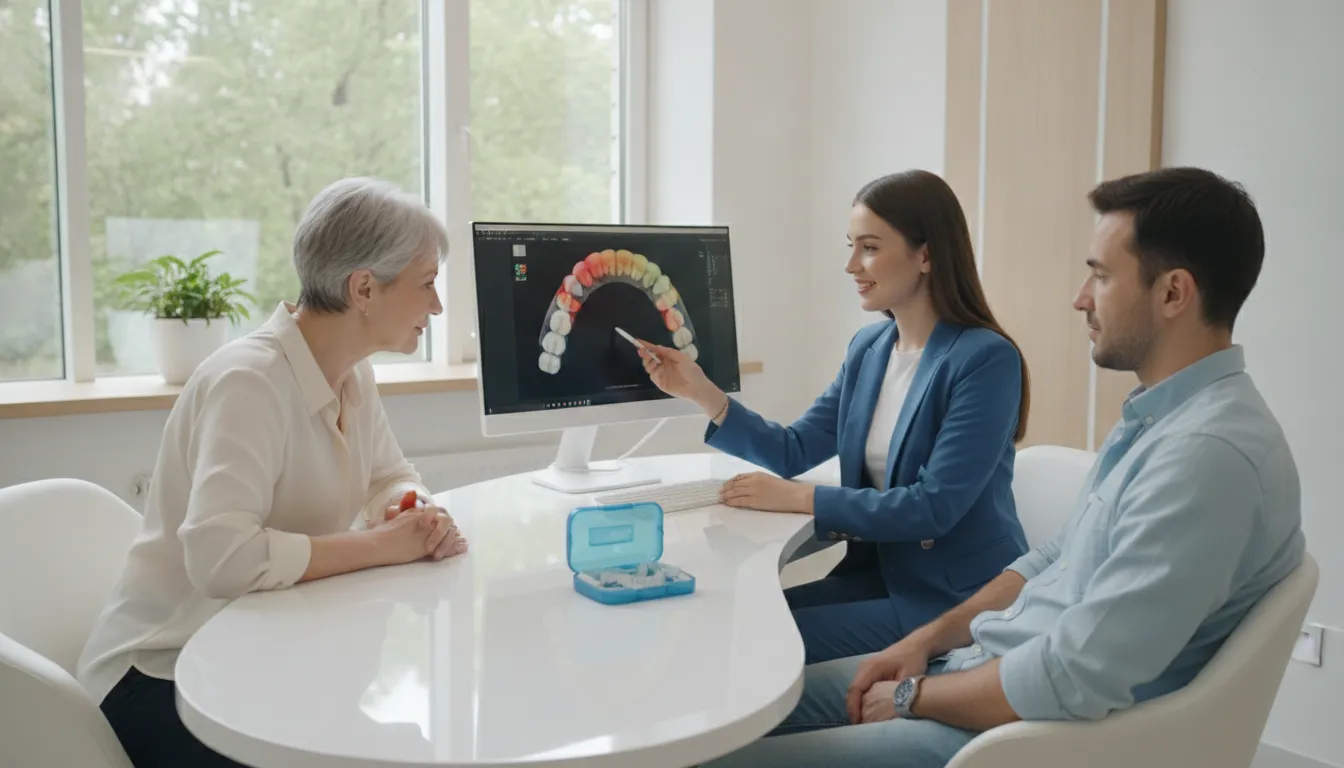
A consultation is also an opportunity for the teen to ask direct questions. They may want to know what the appliance feels like, how to care for it, or what changes to expect in their routine. Clear answers help families make an informed decision without assuming that one option suits everyone.
Parents can make the answers easier to use by grouping them into three headings in their notes: clinical plan, daily care, and support. Under clinical plan, record what the orthodontist recommends and why. Under daily care, write down how the teen should manage meals, cleaning, storage, and activities. Under support, note how to reach the office, what to do about a problem, and what follow-up is expected. This simple format helps the family review the conversation later and notice any question that still needs an answer.
If you are comparing information from more than one source, keep the comparison tied to the same questions. Ask each clinician to explain the recommended appliance, the responsibilities it creates, and the follow-up process. Avoid comparing a general claim from a website with a treatment plan based on an examination. The teen’s own clinical findings are what make the discussion specific.
How can families make a thoughtful choice?
Start with the clinical recommendation, then consider the routine the teen can realistically maintain. Compare more than appearance: think about appliance care, meals, hygiene, school, activities, and follow-up. If there are two suitable approaches, ask the orthodontist to explain the trade-offs for this case. A side-by-side list of priorities can help:
- Write down the teen’s priorities. Note preferences about visibility, meal routines, and managing an appliance.
- Be candid about habits. Discuss whether remembering a removable aligner and cleaning teeth after meals will fit the teen’s day.
- Review the clinician’s reasoning. Ask what the treatment plan needs to accomplish and why the recommended appliance fits.
- Clarify practical details. Ask about care instructions, appointments, activities, fees, and how to get help with an appliance problem.
- Decide together. Parents can support the plan, but the teen should understand the daily responsibilities involved.
Families in Watkinsville, Athens, or Grayson can learn about the practice’s Watkinsville location, Athens location, and Grayson location. The guide to a first orthodontic visit can also help families know what to expect when they meet with the team.
Before leaving the consultation, make sure both parent and teen can explain the next step in plain language. The parent should understand the recommendation and how to ask follow-up questions. The teen should know what daily care is expected and what to do if something is lost, damaged, or uncomfortable. If either person is uncertain, ask for clarification before treating an assumption as an instruction.
Families do not need to decide based on a single preference or fear. A decision can reflect the clinician’s evaluation, the teen’s willingness to manage the routine, and the family’s questions about school, sports, and follow-up. The most useful comparison is the one that leads to a plan the teen understands and the orthodontist can supervise.
Request a complimentary consultation for your teen
Frequently asked questions
Is Invisalign or braces better for every teen?
No. The best option depends on the teen’s orthodontic needs, the clinician’s evaluation, and the family’s preferences and ability to follow the care routine. Ask the orthodontist to explain why a recommendation fits the specific case.
Do teens have to remember to wear Invisalign?
Yes. Aligners are removable, so the teen needs to follow the orthodontist’s wear instructions, keep track of the trays when they are out, and put them back as directed. Ask the clinician what to do if an aligner is lost or damaged.
Are braces easier because they stay on the teeth?
They do not need to be removed and reinserted, but they require careful cleaning and attention to food and appliance-care instructions. The orthodontist can explain the responsibilities that come with braces as well as aligners.
Can an orthodontist tell us which option is right at the first visit?
The orthodontist can evaluate the teen and discuss an appropriate plan. The clinician may need to review the teen’s individual needs and goals before explaining which options are suitable and what each would involve.
Invisalign and braces each involve a different daily routine, and neither is the right choice for every teen. A personalized conversation with an orthodontist can help your family weigh the clinical recommendation, the teen’s preferences, and the responsibilities of each option.