Searching for the best Invisalign provider Athens GA families can choose? Start with more than a provider directory or a polished smile preview. The right orthodontist should explain how your bite and goals will be evaluated. They should also explain who guides the plan, how progress is monitored, and what support your family can expect.
Request a complimentary Invisalign consultation with Russell Orthodontics
“Best” is not a universal ranking. Invisalign treatment should be matched to the individual patient, so a thoughtful choice is one that combines orthodontic judgment, relevant experience, clear communication, and a practical care experience. This guide gives Athens-area patients and parents a simple checklist for comparing providers and preparing for a useful first conversation.
How to Choose the Best Invisalign Provider in Athens, GA
An orthodontist is not simply handing over a set of clear trays. Treatment involves assessing the relationship between the teeth and bite, deciding what movements are appropriate, sequencing a plan, and checking how the teeth respond. Your provider should be willing to explain that process in plain language and describe what can only be determined after an individual evaluation.
As you compare practices, look for these six signals.
| What to compare | Question to ask | Why it matters |
|---|---|---|
| Experience | Who plans and oversees Invisalign treatment? | You can understand the provider’s role and relevant experience. |
| Evaluation | What will you review before recommending a plan? | The conversation can address the patient, not just the aligners. |
| Monitoring | How is progress checked between appointments? | You know how questions and changes are handled during care. |
| Fit | How will this approach fit the patient’s routine? | Daily responsibilities and office logistics are discussed early. |
1. Orthodontic experience that supports treatment judgment
Ask how long the provider has worked with Invisalign and what types of patients they routinely treat. Experience is not a promise that every case will have the same timeline or result. It is context that can help an orthodontist recognize when a straightforward aligner plan may be appropriate, when additional planning is needed, and when another treatment approach deserves discussion.
A practice should also be transparent about the limits of a provider designation or experience claim. A label can be one useful data point, but it cannot determine whether Invisalign is right for your teeth, bite, age, goals, or daily routine. A consultation remains the place to discuss your specific situation.
2. An evaluation that goes beyond a quick scan
A digital scan can be helpful, but it is one part of a broader orthodontic evaluation. Ask what the consultation includes and whether the provider will discuss your bite, tooth positions, treatment goals, and relevant health history before recommending a direction. You should leave with a clearer understanding of what the proposed plan is designed to address and which questions still need to be answered.
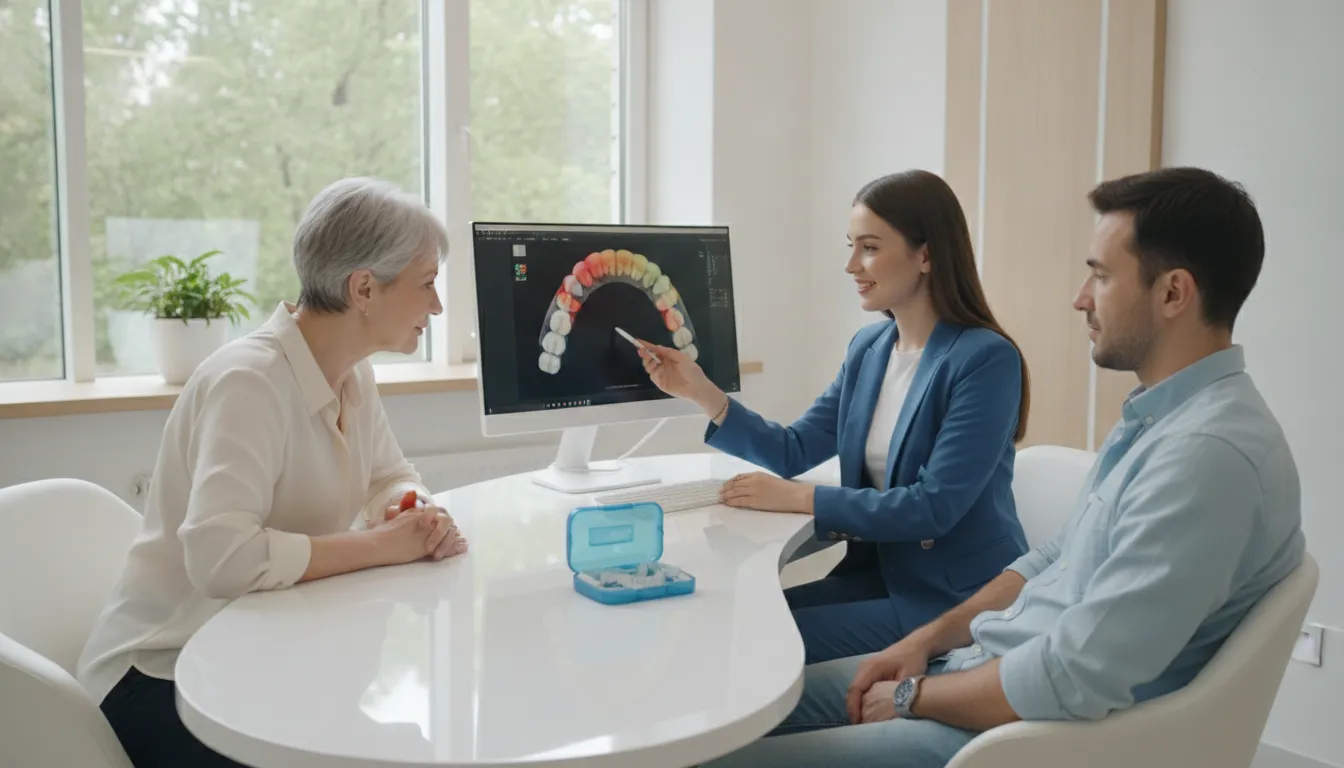
Russell Orthodontics describes its Invisalign consultations as including a personal evaluation, digital scanning, treatment discussion, and visualization. You can review the practice’s Invisalign treatment overview before your appointment so you know which parts of the process you want to ask about.
3. A treatment plan made for the patient, not a package
Two people can ask about Invisalign and need very different conversations. A teen may need help building consistent aligner habits around school, sports, and social activities. An adult may be balancing treatment with work, travel, or family responsibilities. A parent may have questions about growth, responsibility, and how much support a child will need at home.
The provider should connect the proposed care to the patient’s priorities without suggesting that one standard package is right for everyone. Ask what the plan is intended to address, what choices you may have, and what would cause the provider to reconsider or adjust the approach.
4. Ongoing monitoring and a clear way to ask questions
Choosing an orthodontist is also choosing how you will be supported after the first appointment. Ask how often progress is reviewed, who evaluates whether the aligners are tracking as planned, and how the office handles questions between visits. If a practice offers virtual check-ins or remote monitoring, ask how that process works and when an in-person visit is still needed.
Russell Orthodontics offers Russell Remote, powered by DentalMonitoring, as a way for some patients to complete periodic check-ins from a phone while Doc Russell monitors progress remotely. Whether that option fits your care depends on the individual plan and the office’s guidance. It is reasonable to ask how technology is used to support, rather than replace, clinical oversight.
5. An office experience that works for your location and routine
Convenience matters because orthodontic care is a process, not a single visit. Consider the office location, appointment availability, virtual-care options, communication preferences, and how the practice supports patients who live in Athens or nearby communities. A convenient office is helpful, but it should not be the only factor. Pair logistics with questions about who provides care and how decisions are made.
Russell Orthodontics lists care in Athens, Grayson, and Watkinsville. Patients considering the Athens office can review the Athens orthodontic office information and confirm the current location details directly with the practice when scheduling.
6. Straightforward answers about the practical details
Before starting treatment, ask what is included in the proposed plan and what appointments are expected. Ask how retainers are handled and which insurance or financing questions the practice can answer. Costs and treatment details vary by patient, so a responsible provider should discuss your options after evaluating your needs rather than making a universal promise online.
You can also ask what happens if an aligner does not fit as expected, if a planned movement needs more time, or if your circumstances change. The goal is not to predict every event. It is to understand how the practice communicates and makes decisions when care needs to be reviewed.
How to compare Invisalign providers in Athens
Once you have shortlisted two or three offices, compare the answers rather than trying to compare slogans. The following questions can help you organize your research:
- Who will evaluate and oversee my treatment? Ask how the orthodontist is involved in planning and monitoring, not just whether the office offers Invisalign.
- What will you look at during my consultation? Listen for an explanation that includes the bite, teeth, goals, and the information needed to determine candidacy.
- How will I see and understand the proposed plan? Ask whether the office uses scans or visualization tools to support the discussion, and what those tools can and cannot show.
- How will progress be checked? Learn about in-office appointments, remote check-ins if available, and how you can reach the team with concerns.
- What age groups and situations do you routinely support? Families should be able to discuss whether the office’s approach fits a child, teen, or adult patient.
- What happens if Invisalign is not the best fit? A trustworthy consultation should leave room for an honest recommendation, including a different orthodontic option when appropriate.
- What should I plan for after active treatment? Ask about retainers and the practice’s process for protecting the alignment you worked toward.
What makes Russell Orthodontics a relevant Athens option?
Russell Orthodontics is an Invisalign-focused orthodontic practice serving Athens, Grayson, Watkinsville, and nearby Georgia communities. The practice currently presents Dr. Ross Russell as a Top 1% Blue Diamond Invisalign Provider and reports more than 20 years of Invisalign experience. Those are useful points to discuss, but they are not a substitute for a personal consultation. The important question is how that experience is applied to your patient’s needs and how the plan will be explained.
The practice also describes a digital workflow that includes iTero scanning and ClinCheck visualization. Technology can make a treatment conversation easier to understand, but a digital preview is not a guarantee of a particular outcome. Ask the team to explain what the proposed movements are intended to do, what factors may affect the plan, and how progress will be monitored.
For more detail on the systems used in the office, you can review the practice’s orthodontic technology information. Bring any questions from that page to the consultation instead of assuming that a feature applies to every patient in the same way.
Consider the patient’s age and daily routine
The best Invisalign provider for one family may not be the best fit for another because the care conversation changes with the patient.
For children and growing patients
Parents may want to ask how the orthodontist evaluates developing teeth, growth, aligner responsibility, and home support. A child’s readiness and treatment needs should be discussed individually. Russell Orthodontics provides information about Invisalign First for younger patients, which can help parents prepare questions about whether an early clear-aligner option belongs in the conversation.
For teens
Teens often need a plan that fits school, activities, meals, travel, and the responsibility of wearing and caring for aligners. Ask how the office teaches aligner habits, how progress is reviewed, and how a parent and teen can stay informed. The practice’s Invisalign information for teens is a starting point, not a determination of candidacy.
For adults
Adults may prioritize discreet treatment, predictable communication, work schedules, and options for maintaining results after treatment. Ask how appointments can fit your routine and how the office handles questions when you are traveling or managing a busy schedule. You can learn more from Russell Orthodontics’ Invisalign information for adults before your visit.
What happens at an Invisalign consultation?
A first visit should be a conversation and evaluation, not pressure to make a decision before you understand your options. The exact sequence varies, but you may discuss the following:
- Your goals and concerns: Explain what you would like to change, what matters most about the treatment experience, and any schedule or lifestyle considerations.
- Your orthodontic evaluation: The provider reviews your teeth and bite and determines what additional information is needed to discuss treatment responsibly.
- Digital records or imaging: When appropriate, scans and other records can help the team study your starting point and communicate the proposed direction.
- Your treatment options: The orthodontist explains whether Invisalign is appropriate to consider, what the plan is designed to address, and which limitations or alternatives matter.
- Your questions about care: Discuss monitoring, appointments, communication, retainers, insurance, and financing. If you do not understand an answer, ask for it in a different way.
Russell Orthodontics invites patients to begin with a complimentary consultation, either virtually or in the office. You can confirm the current appointment process and what to bring through the practice’s consultation request page.
What “best” does not mean?
A careful search avoids promises that no provider can make before evaluating a patient. The word best does not automatically mean the lowest price, the shortest timeline, the newest technology, or the most impressive before-and-after gallery. It also does not mean that a provider designation guarantees a particular result for every patient.
Instead, look for a provider who can explain the reason for the proposed plan, acknowledge its limits, answer questions without pressure, and provide a realistic way to stay supported during care. The goal is an informed treatment decision that fits the patient, not a generic claim that fits everyone.
Ready to compare your options? Request a complimentary consultation with Russell Orthodontics and bring this checklist to your conversation.
Frequently asked questions
How do I choose the best Invisalign provider in Athens?
Compare orthodontic experience, the depth of the initial evaluation, who oversees the plan, how progress is monitored, and whether the office fits your family’s location and routine. Then use a consultation to discuss your individual needs. A provider’s designation or online description is helpful context, but it does not replace that evaluation.
Is a Top 1% Invisalign designation enough to choose a provider?
It can be one factor to consider, especially when you ask what the designation means and how the provider applies that experience. It does not by itself determine candidacy, treatment length, cost, or outcome. Ask the orthodontist to explain how the proposed plan fits your teeth, bite, and goals.
Should I choose an orthodontist close to Athens?
Location can make appointments and communication easier, but convenience should be balanced with the provider’s approach, oversight, and ability to support the patient. If you live in Athens or a nearby community, ask how in-office visits and any available virtual check-ins would fit your routine.
What should I bring to an Invisalign consultation?
Bring your questions, your schedule concerns, relevant dental or orthodontic history, and the goals you want to discuss. Parents can include questions about home support and daily routines. You do not need to arrive with a decision; the purpose of the visit is to understand your options.
Start with an informed conversation
Choosing an Invisalign orthodontist in Athens is easier when you know what to ask. Focus on individualized evaluation, clinical oversight, transparent communication, and a care experience that fits the patient’s life. Once you have answers to those questions, you can decide whether Russell Orthodontics is the right place to explore your next step.