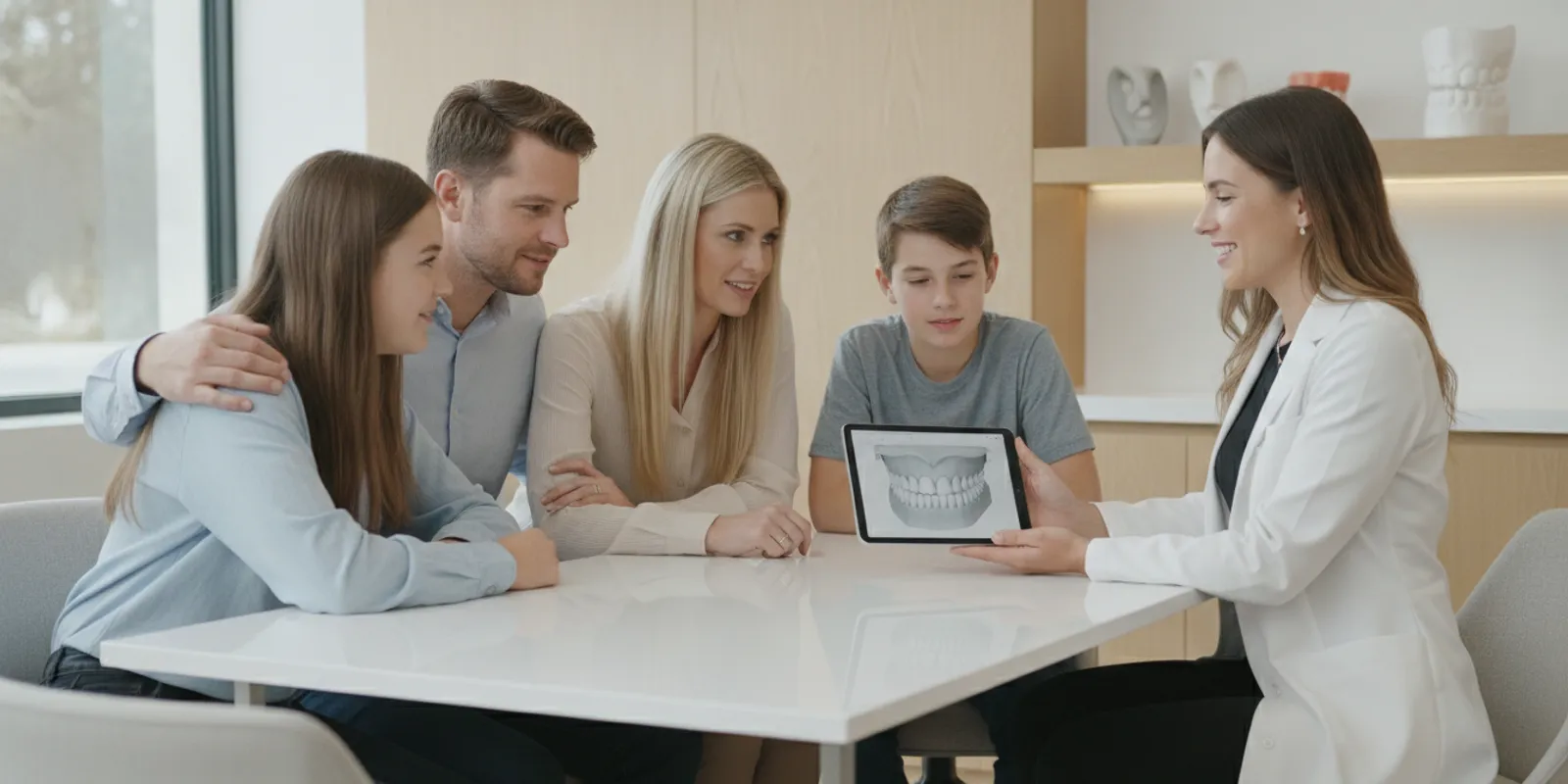
Orthodontic emergencies can happen during meals, sports, travel, or even a normal day at home. A wire may shift, an attachment may come loose, or an aligner may crack without warning. The first step is knowing what is considered an orthodontic emergency and what can safely wait for professional instructions. Breathing problems, heavy bleeding, serious swelling, facial injuries, and severely damaged teeth need immediate medical attention. A loose bracket or irritated cheek usually does not. With simple first-aid steps and timely communication, you can protect your mouth and treatment. Russell Orthodontics offers personalized support for braces, Invisalign, retainers, and other appliances.
Key Takeaways
- Recognize serious warning signs: Seek immediate medical care for breathing or swallowing problems, uncontrolled bleeding, severe swelling, major facial trauma, or a knocked-out permanent tooth.
- Handle minor appliance issues carefully: Cover sharp edges with orthodontic wax, choose soft foods, and use gentle comfort measures. Do not glue, cut, bend, or force braces or appliances.
- Contact Russell Orthodontics promptly: Report loose brackets, broken wires, damaged aligners, lost retainers, or worsening pain so the team can recommend the right next step, including Russell Remote support when appropriate.
What Counts as an Orthodontic Emergency?
An orthodontic emergency involves a problem that threatens your breathing, swallowing, safety, oral health, or a permanent tooth. Examples include uncontrolled bleeding, severe facial trauma, a suspected jaw fracture, serious swelling, or a tooth that has been knocked out or pushed into the gums. These situations require immediate medical or emergency dental care, rather than waiting for a routine orthodontic appointment.
Most problems involving braces, Invisalign, retainers, or other appliances are uncomfortable but not life-threatening. A loose bracket, poking wire, lost elastic, or damaged aligner can often be protected at home until your orthodontist provides instructions. Even so, contact the office promptly. Leaving an appliance problem untreated can cause cuts, discomfort, treatment delays, or additional damage.
If you are not sure how serious the issue is, call your orthodontist and explain what happened. Russell Orthodontics serves patients in Athens, Grayson, and Watkinsville, with personalized care for braces, Invisalign, and other orthodontic treatments. When symptoms suggest a medical emergency, call 911 or go to the nearest emergency department first.
Call 911 for life-threatening symptoms
Call 911 or seek immediate emergency care if you have heavy or uncontrolled bleeding, trouble breathing or swallowing, or a suspected broken or dislocated jaw. Major facial trauma also needs urgent evaluation, particularly if you have confusion, dizziness, loss of consciousness, or unusual drowsiness.
A permanent tooth that has been knocked out, pushed into the gums, or severely displaced also requires immediate attention. Severe pain combined with facial swelling, fever, pus, or other signs of infection may indicate a serious problem that cannot wait.
The American Association of Orthodontists outlines symptoms that require emergency care. Do not wait for your orthodontist’s office to open when you have symptoms that affect breathing, swallowing, consciousness, or uncontrolled bleeding. Tell the emergency team that you are receiving orthodontic treatment and explain when the problem occurred.
Seek emergency care for serious dental trauma
A hard impact to the face can damage your braces, teeth, jaw, facial bones, or the tissues supporting your teeth. Car accidents, sports injuries, falls, and other major blows may cause injuries that are not obvious at first. Emergency dental or medical care may be needed to check for fractures and repair broken teeth.
Seek urgent evaluation if a tooth is fractured, suddenly loose, severely displaced, or painful after an impact. Significant jaw pain, facial swelling, numbness, or difficulty opening and closing your mouth also deserves prompt attention. A dentist or medical professional can assess the injury and determine whether imaging or treatment is necessary, as explained in this guide to serious orthodontic trauma.
After receiving emergency care, contact your orthodontist. The orthodontic team can check whether your braces, attachments, wires, or other appliances need repair and adjust your treatment plan if necessary. Do not try to remove damaged braces yourself unless a medical professional specifically tells you to do so.
Contact your orthodontist promptly for urgent appliance problems
Most orthodontic appliance problems are not life-threatening, but they should still be handled promptly. A loose bracket, broken wire, detached band, damaged aligner, or loose attachment can rub against your cheeks or gums. It may also interfere with tooth movement if you continue wearing the appliance without guidance.
Contact your orthodontist for persistent discomfort, a wire that continues to poke after you apply wax, an appliance that no longer fits, or a part that becomes loose during eating or sports. Take a clear photo if the office requests one, and share useful details, including what broke, whether you have pain or bleeding, and when the problem started.
Some patients may be able to receive guidance without an immediate office visit through Russell Remote, when the concern is appropriate for remote support. Your orthodontist can tell you whether to protect the area at home, schedule an earlier appointment, or seek dental or medical care.
Treat minor soreness and irritation at home
Mild soreness after an adjustment, a new set of aligners, or the placement of an appliance is common. It often improves within a few days. Choose soft foods, avoid anything hard or chewy, and cover a sharp bracket or wire with orthodontic wax to reduce rubbing against your cheeks and lips.
A warm saltwater rinse can soothe minor mouth irritation. You may also use an over-the-counter pain reliever if it is safe for you and you follow the directions on the label or from your healthcare provider. If a wire moves easily, gently guide it toward your teeth with a clean pencil eraser.
Do not force, cut, twist, or sharply bend a wire. Contact your orthodontist if soreness becomes severe, irritation worsens, or symptoms do not improve. These at-home steps for minor orthodontic problems can help protect your mouth while you wait for professional guidance, but they do not replace an evaluation when the problem continues.
Understand why most broken braces are not medical emergencies
A broken bracket or loose wire can feel alarming, but it usually does not require a trip to the emergency room. Most orthodontic emergencies are not life-threatening, although delaying care may lead to more discomfort or interrupt treatment progress. Your orthodontist can often recommend temporary steps to keep the area protected until you can come in.
Apply wax over anything sharp, choose soft foods, and avoid touching the damaged part unnecessarily. If a bracket, band, or other piece comes off, save it and bring it to your appointment. Call the office promptly so the team can decide whether you need an earlier visit or can safely wait until your next scheduled appointment.
Never glue a bracket back in place, force an appliance into position, or make a major repair at home. These actions can injure your teeth and gums or make the appliance more difficult to repair. As orthodontic emergency guidance explains, prompt communication helps protect comfort and treatment progress, even when the problem is not a medical emergency.
Assess Common Braces and Appliance Problems
Most orthodontic problems are uncomfortable rather than life-threatening, but they still deserve timely attention. A loose bracket, poking wire, lost aligner, or damaged retainer can interfere with treatment if it remains unaddressed. Before deciding what to do, check your symptoms. Severe pain, heavy bleeding, significant swelling, trouble breathing, or trouble swallowing requires immediate medical care, not a routine orthodontic appointment.
For less serious problems, focus on protecting your mouth and appliance until you can speak with your orthodontist. Orthodontic wax, a gentle warm saltwater rinse, and over-the-counter pain relief may offer temporary comfort when used as directed. Do not glue, cut, bend, or force orthodontic parts back into place. Contact your orthodontist, explain what happened, and send a photo if the office requests one. The American Association of Orthodontists’ emergency guidance can help you determine how quickly to seek care.
The right response may depend on whether you wear traditional braces, Invisalign, a retainer, an expander, or another appliance. When in doubt, call your orthodontic office instead of guessing. Early guidance can protect your teeth, prevent unnecessary discomfort, and help keep treatment on schedule.
Manage loose or broken brackets, bands, and tubes
Brackets, bands, and tubes can loosen or fall off after biting hard foods, chewing on objects, or experiencing an impact. A loose bracket may slide along the archwire, while a detached bracket can irritate your cheek or become easy to swallow. Do not pull on the bracket or remove it unless your orthodontist specifically instructs you to do so.
If the bracket is still attached to the wire, leave it in place and cover rough edges with orthodontic wax. If it comes off completely, place it in a clean container and bring it to your appointment. Contact the office promptly so the team can decide whether it needs to be reattached and whether your treatment schedule should change. Learning about the types of braces offered by Russell Orthodontics can also help you identify the appliance components used in your treatment.
Address poking, loose, or broken archwires
A loose, bent, or broken archwire can poke your cheeks, lips, or tongue and create a painful sore. Wash your hands and check whether the wire has simply moved out of position. If it moves easily, you may gently guide it toward the tooth with a clean cotton swab or the eraser end of a pencil. Never force, twist, or cut the wire with household tools.
Cover the sharp end with orthodontic wax to reduce irritation, then contact your orthodontist. A warm saltwater rinse may soothe the affected tissue while you wait. If the wire causes a deep cut, bleeding that will not stop, or severe pain, ask for urgent instructions. Your orthodontic team can recommend the safest temporary step based on your braces and the location of the wire.
Replace lost ligatures, separators, spacers, or elastics
Small orthodontic parts can come loose while you eat or brush. Ligatures hold the archwire against the brackets, while separators and spacers create room between teeth before certain appliances are placed. Elastics apply the specific force prescribed for your bite. Losing one may not require emergency medical care, but it can affect treatment if it is not replaced.
Call your orthodontist and explain which part is missing and when you noticed it. Do not substitute a rubber band, hair tie, or another item from home. If you lose an elastic, ask whether you should begin using a new one or wait for instructions. Continue brushing carefully around the area, and save any remaining pieces so the team can identify what is needed. Reporting the problem early can help prevent avoidable treatment delays.
Handle loose Invisalign attachments or lost aligners
Invisalign attachments are small, tooth-colored shapes that help aligners guide your teeth. If one feels loose or falls off, keep wearing your aligner if it still fits comfortably and does not cause unusual pain. Then contact your orthodontist so the attachment can be replaced or the next step can be confirmed. Do not try to glue the attachment back onto your tooth.
If you lose an aligner, contact the office before moving ahead in your series. Your orthodontist may recommend wearing a previous aligner temporarily if it still fits comfortably, but follow the instructions you receive. Keep your aligners in their case when they are not in your mouth, and avoid wrapping them in a napkin where they can be mistaken for trash. Russell Orthodontics provides customized Invisalign treatment for children, teens, and adults, so the best response may vary by treatment plan.
Protect damaged retainers, expanders, and other appliances
A retainer, expander, or removable appliance that is cracked, bent, sharp, or no longer fits correctly should be evaluated by your orthodontist. Do not force it into place. Pressing a damaged appliance onto your teeth can cause discomfort or apply pressure in the wrong direction.
Remove the appliance if it is cutting your gums, unless your orthodontist gives you different instructions. Keep all pieces in a protective case and bring them to your appointment. If you lose a retainer, contact the office as soon as possible because teeth can begin shifting without regular retention. Russell Orthodontics can provide guidance for different braces and orthodontic appliances, including what to do when a device no longer fits as expected.
Respond to swallowed or inhaled orthodontic parts
If a bracket, aligner piece, retainer fragment, or other orthodontic part is missing, try to determine whether it was swallowed or inhaled. A small piece that was swallowed may pass without causing a problem, but you should still contact your orthodontist for advice. Do not induce vomiting or take action based on guesswork.
Call 911 or seek emergency care immediately if the person is choking, struggling to breathe, unable to swallow, turning blue, or experiencing persistent coughing after inhaling a part. Breathing problems require medical attention, not an orthodontic appointment. If symptoms are mild but you remain concerned, call a medical professional and describe the part, when it went missing, and any symptoms that followed. Keep the damaged appliance or a photo of it if available, since it may help the medical team understand what happened.
Address severe pain, swelling, mouth sores, or suspected infection
Mild tenderness after an adjustment or when starting a new aligner is common. Severe or ongoing pain is different and should be reported to your orthodontist. Contact the office if pain prevents you from eating or sleeping, does not improve with recommended comfort measures, or becomes worse instead of better.
Swelling in the gums, face, or jaw, especially with fever, pus, a bad taste, or worsening redness, may signal an infection. Your orthodontist can help determine whether the problem relates to your appliance, but significant swelling or infection may also require care from a dentist or physician. Seek immediate medical attention for swelling that affects breathing or swallowing. While arranging professional guidance, review the AAO’s signs of a dental emergency, and never place aspirin directly on a sore or swollen area.
When Should I Seek Immediate Medical Care?
Most orthodontic problems are uncomfortable but not dangerous. A loose bracket, poking wire, or lost elastic usually calls for guidance from your orthodontist, not a trip to the emergency room. Immediate medical care is needed when an injury or symptom may affect your breathing, swallowing, airway, overall health, or permanent teeth.
If you are unsure how serious the problem is, ask for professional guidance. The American Association of Orthodontists’ emergency recommendations explain which symptoms require urgent attention, but they do not replace an in-person evaluation. Call 911 for life-threatening symptoms. After you are medically stable, contact your orthodontist so the team can evaluate damaged braces or appliances.
Russell Orthodontics serves patients in Athens, Grayson, and Watkinsville. For non-life-threatening concerns, the team can provide personalized instructions for braces, Invisalign, retainers, expanders, and other appliances. Certain issues may also qualify for guidance through Russell Remote, but remote support should never delay emergency care.
Get help for breathing or swallowing problems
Call 911 or seek emergency care immediately if you have trouble breathing or swallowing. These symptoms can signal serious swelling, an allergic reaction, a significant injury, or an object affecting your airway. Do not wait for your orthodontist’s office to open, and do not try to remove an object if doing so could make breathing more difficult.
Stay upright if you can, and ask someone to stay with you while help is on the way. If a wire, bracket, or other appliance component may be involved, tell the emergency team what happened. Once the immediate danger has been addressed, contact your orthodontist about any damaged appliance or treatment component.
Seek care for uncontrolled bleeding or worsening swelling
A small amount of bleeding caused by irritation may stop with gentle pressure. Heavy bleeding that does not stop requires urgent medical attention. Apply clean gauze or a clean cloth with steady pressure while arranging care. Avoid lifting the gauze repeatedly to check the area, since this may disturb clotting.
Worsening swelling also deserves prompt attention, especially when it affects the face, mouth, neck, or throat. Swelling combined with severe pain, fever, breathing problems, or difficulty swallowing may indicate a serious condition. Seek emergency care instead of waiting for a routine orthodontic appointment.
Get treatment for major facial, mouth, or jaw trauma
A collision, fall, sports injury, or other major impact can damage more than your braces. Go to an emergency department after significant facial trauma, a suspected jaw fracture, loss of consciousness, severe bleeding, or symptoms that could indicate a head injury.
Do not try to straighten a displaced jaw or force an injured tooth back into place unless a qualified medical professional tells you to do so. If possible, remember when and how the injury occurred. Photos of damaged braces or appliances may help your orthodontist plan follow-up care, but medical evaluation comes first.
Address knocked-out, displaced, or severely broken permanent teeth
A permanent tooth that has been knocked out, pushed into the gums, or severely displaced needs immediate dental or emergency care. Prompt treatment may improve the chance of saving it. Handle a knocked-out tooth by the crown, or visible chewing surface, and avoid touching the root.
If the tooth is dirty, gently rinse it without scrubbing. If possible, place it back in the socket, but do not force it. Otherwise, keep it moist in milk or a tooth-preservation solution while seeking care. Contact an emergency dentist or emergency department immediately, then notify your orthodontist about damaged braces.
Treat fever, pus, or spreading infection
Fever, pus, increasing redness, or swelling that spreads through the face or mouth can indicate an infection requiring urgent evaluation. Although an appliance can irritate tissue, braces should not be a reason to ignore signs of infection.
Contact a dentist promptly or seek emergency care, particularly if you also have severe pain, facial swelling, difficulty opening your mouth, or trouble breathing or swallowing. Do not place aspirin directly on your gums or take leftover antibiotics. A medical or dental professional must identify the cause and recommend appropriate treatment.
Take first steps while waiting for emergency care
While waiting for help, focus on staying safe and preventing additional injury. Sit upright if breathing or swelling is a concern. Apply gentle pressure with clean gauze to bleeding unless doing so interferes with breathing. For a sharp wire that is irritating your cheek but is not part of a serious injury, orthodontic wax can provide temporary coverage.
You may take an over-the-counter pain reliever if it is safe for you and you follow the label directions. Never place medication directly on your gums. Do not eat or drink if emergency personnel tell you not to. If it is safe and practical, keep broken appliance parts, aligners, or teeth in a clean container and bring them with you.
Choose between the emergency room, dentist, or orthodontist
Call 911 or go to an emergency department for trouble breathing, difficulty swallowing, uncontrolled bleeding, major facial trauma, severe swelling, loss of consciousness, or other potentially life-threatening symptoms. Emergency clinicians can stabilize urgent medical problems that an orthodontic office is not equipped to manage.
For a knocked-out or severely injured permanent tooth, contact an emergency dentist as quickly as possible. Your orthodontist can address braces, Invisalign attachments, aligners, retainers, and other treatment concerns after the immediate dental or medical issue is managed.
For a loose bracket, poking wire, lost elastic, or damaged appliance without severe symptoms, contact Russell Orthodontics for instructions. The team may recommend an appointment, temporary home care, or an appropriate remote check.
Tell the medical team or orthodontist what happened
Clear details help your care team make faster decisions. Explain when the problem started, what caused it, and whether you experienced an impact. Mention when symptoms appeared and whether you have bleeding, swelling, fever, pain, or changes in breathing or swallowing.
Tell your orthodontist which appliance you wear and whether a bracket, wire, attachment, aligner, retainer, expander, or elastic is involved. Bring the damaged item if it is safe to do so, and share any instructions from the emergency department or dentist. This information helps Russell Orthodontics plan follow-up care and adjust your treatment safely.
How Can I Treat a Minor Orthodontic Problem at Home?
Many orthodontic problems are uncomfortable without being medically dangerous. A loose bracket, poking wire, or irritated cheek can often wait for instructions from your orthodontist rather than requiring immediate emergency care. Simple steps can ease discomfort and protect your braces or appliance until the office can evaluate the issue.
Start by staying calm and avoiding do-it-yourself repairs. The American Association of Orthodontists’ emergency guidance recommends protecting the irritated area, managing minor soreness, and contacting your orthodontist for advice. If you have trouble breathing or swallowing, uncontrolled bleeding, severe facial trauma, or rapidly increasing swelling, seek immediate medical care.
Wash your hands and inspect the problem gently
Wash your hands with soap and water before touching your braces, aligner, retainer, or other appliance. Then use a mirror and good lighting to inspect the area. Look for a loose bracket, detached band, bent wire, cracked aligner, or appliance that has shifted.
Do not pull on anything that feels firmly attached. If you cannot identify the problem, take a clear photo and send it to your orthodontist if the office accepts images. Note when the issue began, whether it causes pain, and whether you can close your mouth comfortably. These details can help your care team recommend the right next step.
Cover sharp brackets or wires with orthodontic wax
Orthodontic wax creates a smooth barrier between a sharp bracket or wire and the inside of your cheek, lip, or tongue. Dry the area with clean gauze or a tissue, then pinch off a small piece of wax, roll it into a ball, and press it over the irritating spot.
Use enough wax to cover the sharp edge without creating a bulky lump. Remove it before brushing and replace it afterward if needed. Never use household wax, glue, or another material not made for oral use.
Wax provides temporary comfort, but it does not repair the appliance. Contact Russell Orthodontics so the team can determine whether you need an earlier appointment.
Reposition a poking wire only if it moves easily
If a thin wire has shifted and is rubbing against your cheek or gum, you may gently guide it toward the tooth with a clean cotton swab or the eraser end of a clean pencil. Try this only when the wire moves easily and does not appear embedded in your tissue.
Stop immediately if you feel resistance or sharp pain. Do not use scissors, nail clippers, tweezers, or other sharp tools inside your mouth. Never force a wire through a bracket or tube.
If the wire continues to poke, has broken into a sharp piece, or is stuck in your gum, call your orthodontist. The team can determine whether it needs to be adjusted or repaired.
Rinse with warm salt water to soothe irritation
A warm salt-water rinse can soothe a cheek, lip, or gum irritated by braces or an appliance. Mix one-half teaspoon of table salt into eight ounces of warm water. Swish gently, then spit it out. Do not swallow the rinse.
You can repeat this several times during the day while the area heals. The water should feel comfortably warm, not hot, because hot water may burn sensitive tissue.
Salt water may ease minor irritation, but it will not treat an infection or fix a damaged appliance. Contact your orthodontist if the sore worsens, does not start improving, or appears with swelling, fever, pus, or a foul taste.
Take over-the-counter pain relief as directed
Minor soreness after an adjustment or irritation from an appliance may improve with an over-the-counter pain reliever. Follow the package instructions, and ask a parent, pharmacist, doctor, or orthodontist if you are unsure which option is appropriate.
Never take more than the recommended dose or combine products that contain the same active ingredient. Children should receive medication only according to age-appropriate label directions or guidance from a medical professional. People with allergies, health conditions, or other medications may need to avoid certain pain relievers.
Pain that is severe, persistent, or getting worse requires professional attention. Medication may provide temporary comfort, but it should not hide symptoms such as swelling, fever, dental trauma, or possible infection.
Protect loose brackets, bands, and appliances
A loose bracket or band may remain attached to the wire even when it no longer sits correctly on the tooth. Avoid touching it with your fingers or tongue. If it rubs against your cheek, cover it with orthodontic wax and choose soft foods until your orthodontist provides instructions.
If a removable appliance breaks or comes loose, place it in a clean container. Do not wrap it in a napkin, where it could accidentally be thrown away. Never glue a bracket or reattach a band at home. Household adhesives can injure oral tissue and make professional repairs more difficult.
Send your orthodontist a photo when possible, and explain whether the part is still attached. Keep any detached pieces and bring them to your appointment.
Save damaged aligners or retainers and ask what to wear
If an aligner or retainer cracks, bends, or becomes unusable, keep it in its case and contact your orthodontist. Do not throw it away. Your orthodontist may need to inspect it or determine whether you need a replacement.
Do not automatically move to the next aligner unless your orthodontist tells you to do so. Depending on your treatment plan, the team may recommend wearing a previous aligner, using the damaged one temporarily, or leaving it out. Only wear an appliance that fits comfortably and has no sharp edges.
If an appliance causes significant pain, cuts your gums, or prevents you from biting normally, remove it and ask for guidance. Russell Orthodontics provides customized Invisalign treatment for children, teens, and adults.
Never cut, bend, glue, or force orthodontic parts
A broken wire or loose appliance may tempt you to reach for household tools. Avoid cutting, bending, gluing, or forcing any orthodontic component. A change that seems minor can injure your cheek or gums, alter pressure on your teeth, or damage the appliance.
Do not pull out a wire, remove a bracket, or push an appliance into place if it does not move easily. Avoid super glue and dental adhesive because they can injure oral tissue and complicate professional repairs.
If a component is dangling, cover it with orthodontic wax and contact your orthodontist. Describe what happened and follow the instructions you receive. For breathing problems, swallowing difficulties, uncontrolled bleeding, or major trauma, seek immediate medical care.
Know when to seek professional care
Home care is appropriate only for minor discomfort and small appliance issues. Contact your orthodontist promptly if a bracket, band, archwire, aligner, retainer, expander, or other appliance is damaged or no longer working as intended. Early guidance can help protect your treatment and prevent irritation from getting worse.
Seek immediate medical care for trouble breathing or swallowing, uncontrolled bleeding, severe swelling, a serious facial or jaw injury, or a knocked-out permanent tooth. Fever, pus, spreading redness, or worsening pain may indicate an infection that needs prompt evaluation.
For non-life-threatening concerns, Russell Orthodontics may be able to provide instructions by phone or through Russell Remote, when appropriate. The team can also advise whether you should visit the Athens, Grayson, or Watkinsville office.
How Can I Prevent Orthodontic Emergencies?
Most orthodontic emergencies are preventable with a few consistent habits. Whether you wear traditional braces, Invisalign aligners, a retainer, or an expander, careful daily routines can reduce breakage, irritation, and interruptions to your treatment.
Start by paying attention to what you eat and how you use your teeth. Hard, sticky, and chewy foods can damage braces, while habits such as chewing ice or biting your nails can affect nearly any orthodontic appliance. Cleaning thoroughly and following your orthodontist’s instructions also helps prevent problems that can lead to pain or infection.
It is still possible for an appliance to loosen or break, even when you are careful. If that happens, contact your orthodontist rather than waiting for your next scheduled visit. The American Association of Orthodontists’ emergency guidance explains why prompt communication is important and offers practical steps for handling common issues.
Keeping an orthodontic emergency kit and your orthodontist’s contact information nearby can also make minor problems less stressful. These simple preparations are especially useful for children, teens, athletes, and anyone who travels frequently.
Avoid hard, sticky, chewy, and crunchy foods
Hard and sticky foods can bend wires, loosen brackets, or damage bands and other appliances. Avoid chewing ice, hard candy, popcorn kernels, nuts, caramels, gummy candy, and similarly tough foods while wearing braces. Sticky foods can also cling around brackets, making thorough brushing and flossing more difficult.
If you are unsure whether a food is safe for braces, choose a softer option. Foods such as yogurt, eggs, pasta, steamed vegetables, and soft fruit are generally easier to eat comfortably. Follow the food recommendations from your orthodontic team, since your instructions may vary depending on your appliance and stage of treatment.
Cut firm foods into small pieces
You do not have to avoid every firm food. Instead, cut apples, carrots, crusty bread, and similar foods into small, manageable pieces before eating them. Remove corn from the cob, and avoid biting directly into firm foods with your front teeth.
Chew carefully with your back teeth and stop if something feels difficult to bite or pull apart. This simple adjustment reduces pressure on brackets and wires. It can also make meals easier for children and teens who are still getting used to braces. When in doubt, cut the food smaller or choose a softer alternative.
Avoid ice, pens, nail biting, and similar habits
Chewing on ice, pens, pencils, fingernails, or other hard objects can place damaging pressure on orthodontic appliances. These habits may loosen brackets, bend wires, chip teeth, or damage Invisalign attachments and retainers.
Try to notice when the habit occurs and replace it with a safer behavior. Put pens down when you are thinking, skip the ice in your drink, or use a stress ball if you tend to bite your nails when nervous. Parents can help younger children by offering gentle reminders without making the habit feel embarrassing or overwhelming.
Clean around braces, Invisalign attachments, and appliances
Plaque and food debris can collect around brackets, wires, Invisalign attachments, and other orthodontic components. Without careful cleaning, buildup may contribute to tooth decay, gum inflammation, bad breath, and soft-tissue irritation.
Brush with a soft-bristled toothbrush and clean around every bracket and along the gumline. Interdental brushes, floss threaders, and water flossers can help reach areas a standard toothbrush misses. If you wear aligners, brush and floss before putting them back in, and clean the trays as instructed. Russell Orthodontics can help you review proper care for Invisalign treatment.
Follow aligner, retainer, elastic, and appliance instructions
Orthodontic appliances work as intended when you use them according to your treatment plan. Wear Invisalign aligners and retainers for the recommended amount of time, change aligners only as directed, and use elastics exactly as prescribed. Do not double up on elastics or skip wear time to make up for missed days.
Follow instructions for cleaning, eating, and storing each appliance. If an aligner no longer fits, an elastic keeps breaking, or an appliance feels uncomfortable, contact your orthodontist before making changes yourself. Your care team can tell you what to do and determine whether the appliance needs an adjustment.
Store removable appliances in their cases
Removable aligners, retainers, and other appliances are easy to lose or damage when they are left on a table, wrapped in a napkin, or placed in a pocket. Store them in a ventilated case whenever they are not in your mouth.
Keep the case with you at school, work, restaurants, and while traveling. Avoid hot water, dishwashers, and direct heat, which can warp some appliances. If you lose or damage a removable appliance, save any pieces you find and contact your orthodontist. You may need to wear a previous aligner or retainer temporarily, but only do so if your care team recommends it.
Wear a properly fitted sports mouthguard
A properly fitted mouthguard helps protect your teeth, cheeks, lips, and orthodontic appliances during sports and activities that involve contact or falls. This is especially important with braces, since an impact can push brackets into the soft tissues inside your mouth.
Ask your orthodontist which type of mouthguard is appropriate for your appliance. A standard store-bought guard may not fit comfortably over braces, while an orthodontic mouthguard is designed to accommodate them. Wear it during practices, games, and recreational activities where your mouth could be injured, even when contact is not expected.
Keep appointments and report problems early
Regular orthodontic appointments allow your care team to check tooth movement, appliance fit, and oral health. These visits also give your orthodontist an opportunity to identify loose brackets, worn parts, or other concerns before they cause greater discomfort or interrupt treatment.
Do not wait for a scheduled appointment if you notice a sharp wire, loose bracket, cracked aligner, damaged retainer, or unusual pain. Contact the office and describe what happened, where the problem is, and whether you have swelling or bleeding. Your orthodontist can tell you whether to come in, use a temporary measure at home, or monitor the issue.
Prepare an orthodontic emergency kit and contact list
A small orthodontic kit can make minor problems more manageable when you are away from home. Consider including orthodontic wax, a travel toothbrush, floss or floss threaders, a small mirror, and clean tweezers. Your orthodontist may recommend additional supplies based on your appliance.
Save your orthodontist’s phone number in your contacts and keep the office’s after-hours instructions accessible. Include your dentist’s information and the location of the nearest emergency department for situations involving serious injury, breathing problems, uncontrolled bleeding, or rapidly increasing swelling.
For non-life-threatening concerns, Russell Orthodontics’ Russell Remote service may provide convenient guidance when appropriate. A remote consultation does not replace emergency medical care, but it can help you understand your next step when an appliance problem occurs away from the office.
Get Orthodontic Emergency Support From Russell Orthodontics
A broken bracket, loose wire, or lost aligner can feel alarming, but most orthodontic problems are not life-threatening. They still deserve prompt attention, especially if an appliance is painful, sharp, or interfering with your treatment. Contact your orthodontist for instructions instead of trying to repair the appliance yourself. The American Association of Orthodontists recommends reporting loose or broken brackets, poking wires, loose bands, expanders, space maintainers, and other appliance concerns.
Russell Orthodontics supports patients in Athens, Grayson, and Watkinsville, Georgia. The team can provide guidance for traditional braces, Invisalign, retainers, expanders, and other orthodontic appliances. When you contact the office, explain what happened, describe your symptoms, and share a photo if requested. This information can help the team decide whether you need an in-person appointment or temporary at-home care.
Orthodontic support is different from emergency medical care. Call 911 or visit the nearest emergency department for trouble breathing or swallowing, uncontrolled bleeding, severe facial trauma, or rapidly worsening swelling. For less serious concerns, contact Russell Orthodontics promptly so you know what to do next.
Contact the Athens, Grayson, or Watkinsville office about appliance issues
Call your Russell Orthodontics office if a bracket comes loose, a wire breaks, a band shifts, or an appliance feels unstable. You should also contact the team if a sharp edge is irritating your cheek or tongue, or if an expander, space maintainer, or retainer no longer fits properly. Mention whether you have pain, swelling, bleeding, or difficulty using the appliance.
When you call, explain when the problem started and whether anything caused it, such as eating hard food or experiencing an impact during sports. If the office requests a photo, take one in good lighting without pulling or bending the appliance. The team can then recommend temporary steps or schedule an appointment based on your situation.
Get personalized guidance for braces, Invisalign, retainers, and expanders
Different appliances require different solutions. A loose bracket may need to remain in place until your appointment, while a lost Invisalign aligner may require instructions about wearing a previous tray or moving to the next one. A cracked retainer or loose expander may also need prompt attention to keep treatment on track.
Russell Orthodontics can tailor its guidance to your appliance and treatment plan. Review the practice’s types of braces and orthodontic appliances to learn more about available treatment options, but contact the team for advice about your specific concern. Do not glue, cut, bend, or force an appliance into position, since an attempted repair could cause additional damage.
Use Russell Remote for appropriate non-life-threatening concerns
Some minor orthodontic concerns may be addressed through Russell Remote, which provides a convenient way to share information with your care team. It may be useful for questions about an aligner, a small appliance issue, or irritation that does not involve severe pain, heavy bleeding, breathing problems, or major trauma.
Follow the instructions provided by Russell Orthodontics and include clear details or photos when requested. Remote guidance does not replace emergency medical care. Go to the emergency department for serious injuries, uncontrolled bleeding, trouble breathing or swallowing, or signs of a spreading infection. If you are uncertain whether your concern is appropriate for remote support, contact the practice for direction.
Explore customized Invisalign care through DocAligners Studio
Russell Orthodontics provides customized Invisalign treatment through DocAligners Studio, the first Invisalign studio in Georgia. The studio combines digital technology with treatment planning based on each patient’s smile, goals, and orthodontic needs. Invisalign options are available for children, teens, and adults who may benefit from clear aligner treatment.
During a consultation, your orthodontist can explain how aligners work and what to do if a tray is lost, cracked, or no longer fits as expected. A loose attachment can also require professional guidance. Do not skip trays or change your wear schedule without asking the practice first. Reporting a problem early can help prevent unnecessary delays in treatment.
Choose a Top 1% Invisalign Provider with advanced technology
Provider experience is an important consideration when you are comparing Invisalign treatment options. Russell Orthodontics is recognized as a Top 1% Invisalign Provider, a distinction associated with extensive experience providing Invisalign care. The team uses advanced technology to plan customized treatment for patients with different ages, lifestyles, and orthodontic goals.
Ask during your consultation how your treatment will be monitored, how often you will meet with the orthodontic team, and what support is available between appointments. You can also ask what to do if an aligner or attachment causes discomfort. Clear instructions and convenient communication options can make it easier to respond calmly and appropriately when an orthodontic problem occurs.
Frequently Asked Questions
What should I do if my braces wire is poking me?
Cover the sharp area with orthodontic wax and rinse gently with warm salt water to soothe irritation. If the wire moves easily, you may carefully guide it toward your teeth with a clean cotton swab or pencil eraser. Do not cut, twist, or force the wire. Contact your orthodontist for next steps.
Should I go to the emergency room for a loose bracket or broken wire?
Usually, no. These issues typically need prompt orthodontic guidance rather than emergency medical care. Call Russell Orthodontics, protect the area with wax, and save any detached pieces. Seek emergency care instead if you also have trouble breathing or swallowing, uncontrolled bleeding, severe swelling, or major facial trauma.
What counts as a serious orthodontic emergency?
Call 911 or visit the nearest emergency department for breathing or swallowing problems, uncontrolled bleeding, a suspected jaw fracture, major facial trauma, loss of consciousness, or rapidly worsening swelling. A knocked-out, severely displaced, or pushed-in permanent tooth also needs immediate dental or medical attention.
What should I do if I lose or damage an Invisalign aligner?
Place the damaged aligner in its case and contact your orthodontist before changing trays. Depending on your treatment plan, the team may recommend wearing a previous aligner temporarily or taking another step. Do not automatically move to the next aligner, and do not wear one that causes sharp pain or cuts your mouth.
Can Russell Orthodontics help with an orthodontic problem remotely?
Some non-life-threatening concerns may qualify for support through Russell Remote. Share clear details and photos if requested so the team can assess the issue and recommend temporary care or an office visit. Remote support should never replace emergency medical treatment for breathing problems, serious injuries, heavy bleeding, or severe swelling.