Invisalign vs braces at work is a routine question, not a popularity contest. One option comes out for meals and goes back in. The other stays on your teeth through every meeting, coffee, and commute. The American Association of Orthodontists says neither appliance is inherently better. An orthodontist starts with records, then matches the plan to your goals and lifestyle. Here is how a normal workday can differ before you decide what to ask at a consult.
Book a complimentary consultation in Athens, Grayson, or Watkinsville and ask which routine fits your week.
How does Invisalign vs braces at work change a normal day?
Start with a Tuesday, not a perfect day. You have a morning meeting, a lunch you did not pack, a late coffee, and a drive between sites. Invisalign uses a series of clear trays you take out to eat or drink anything other than water. Braces stay bonded to the teeth, so the appliance works while you are in the meeting and while you are eating.
That single difference sets the rest of the day. With aligners, the repeated job is remove, store, clean, and put them back. With braces, the job is eating in a way that protects the brackets and cleaning around wires you cannot take off. Neither routine is automatically easier. The better fit is the one you can keep on a busy week.
Russell Orthodontics keeps Invisalign central and also offers traditional braces. A clear comparison of Invisalign and braces for adults covers how the two appliances move teeth and when case complexity matters. This guide stays on the workday around that choice.
Use the table as a planning sheet, not a diagnosis. Your orthodontist still has to see the bite before recommending one path.
| Workday moment | Invisalign | Braces |
|---|---|---|
| Morning meeting | Trays stay in. A slight lisp can show up with a new tray, then often fades. | Brackets and wire stay visible. Speech is usually closer to your normal voice after the first days. |
| Coffee or tea | Take trays out for anything but water, then brush before they go back in. | You can drink with braces on. Skip very hard or sticky add-ins that can bend a wire. |
| Lunch at your desk | Remove trays, eat, brush or rinse, then reinsert. A case keeps trays off a napkin. | Eat with braces on. Cut hard foods and avoid sticky ones so a bracket does not pop off. |
| Client-facing hours | Clear trays are hard to see. You still need a private minute after meals. | Brackets show in photos and close conversation. You do not pause to reinsert anything. |
| End-of-day clean | Brush and floss normally, then clean the trays as your orthodontist directs. | Brush around every bracket and thread floss under the wire. |
| Travel between offices | Eligible patients may use Russell Remote scans between planned visits. | Adjustments happen in the office. Ask how often those visits land on your calendar. |
What should you do with aligners during meetings and calls?
Most of a meeting is simple if the trays are already in. The American Association of Orthodontists says clear aligners are generally worn at least 22 hours a day. That leaves a short window for meals and cleaning, not for leaving them out through a long working lunch and a commute.
New trays can change how some words sound for a day or two. If you present often, ask whether you can start a new tray on a Friday night so the first hours happen away from Monday calls. Do not skip ahead or wear an old tray longer because a presentation is coming. The sequence is part of the plan.
If you need the trays out for a photo or a short toast, put them in the case, not in a napkin. Then put them back as soon as you can. A long gap is lost wear time, and lost wear time is what makes later trays feel tight.
Braces do not ask you to manage a case during a call. The tradeoff is that brackets and the wire stay in every close-up. Ceramic brackets can be less noticeable than metal, but the wire and ties can still show. If on-camera days matter, say so at the consult so the recommendation includes that fact.
How do meals and coffee fit between appointments?
Aligners come out for meals and for drinks other than water. The AAO comparison is direct: remove aligners to eat without food restrictions, and avoid hard, sticky, and chewy foods with braces. That is the workday split in one sentence.
A practical aligner lunch looks like this:
- Pop the trays out and seal them in the case before you touch food.
- Eat the meal you actually wanted. There is no braces food list while the trays are out.
- Brush, or at least rinse well, so food is not trapped under plastic.
- Seat the trays fully. A half-seated tray can feel fine and still miss the planned pressure.
Coffee is the habit that breaks the 22-hour goal. Sipping a latte for an hour with trays out is an hour of no movement. Sipping it with trays in can stain the plastic and bathe teeth in sugar under a cover. Drink the coffee, then clean and reinsert. If your office culture is a mug on the desk all afternoon, say that out loud at the consult. It is a real constraint, not a small preference.
With braces, you can drink and eat without a removal step. You do need to change a few foods. Ice, hard nuts, sticky candy, and tough bagels are common bracket-poppers. A broken bracket is not an emergency in most cases, but it does mean a repair visit and a pause in that tooth’s movement. Pack a lunch you can eat without fighting the wire.
What belongs in a desk cleaning kit?
Both options need a small kit at work. The contents are not the same.
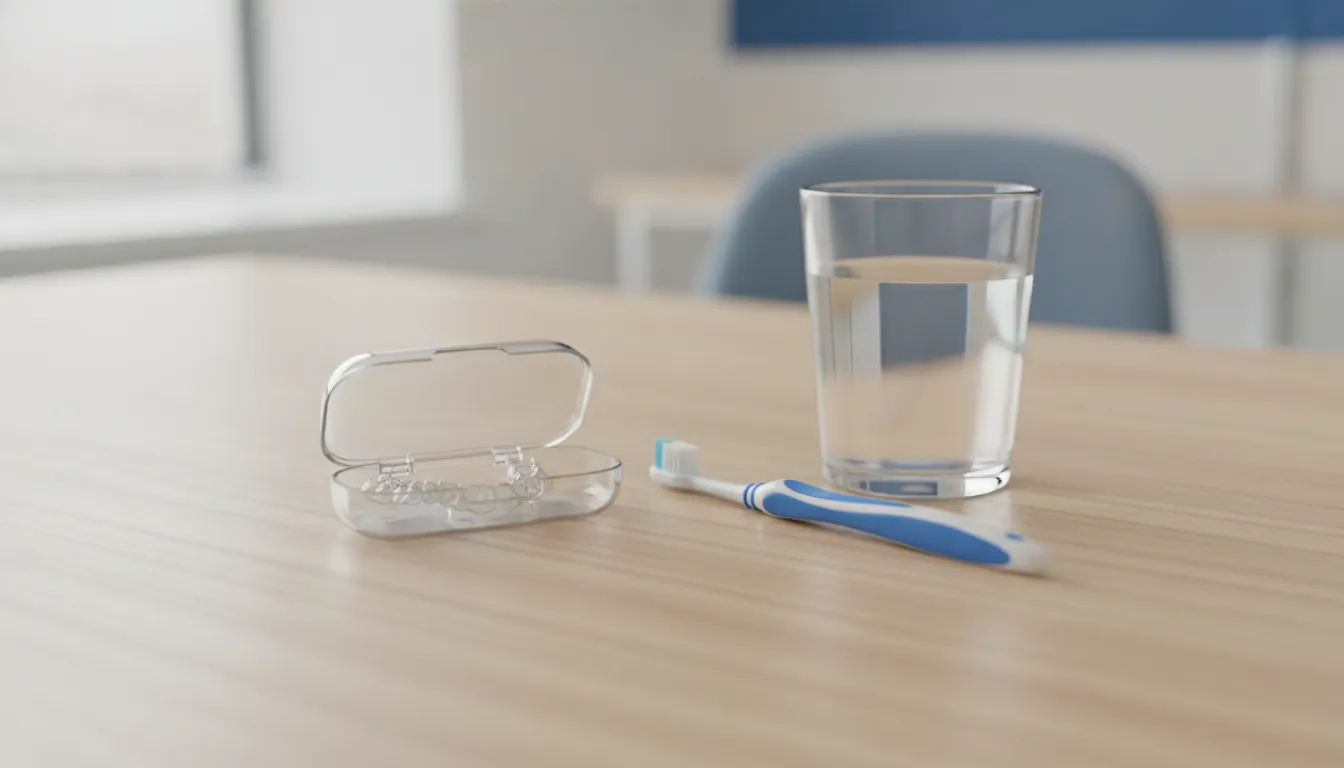
- Aligners: the case, a travel toothbrush, floss, and a spare rinse. Clean teeth before the trays go back in. Clean the trays the way your orthodontist shows you, not with hot water, which can warp them.
- Braces: a travel brush, floss threaders or picks that fit under a wire, and orthodontic wax if a bracket rubs during a long meeting.
The AAO notes that every patient still brushes and flosses daily, whatever the appliance. Aligners make the tooth surfaces easier to reach and add a second object to clean. Braces make the tooth surfaces harder to reach and remove the second object. If you already rush your nighttime routine, be honest about which extra step you will skip.
Keep the kit in a work bag, not only in a bathroom at home. The risky moment is a lunch away from your building, not the sink you already use at night.
How do office visits fit a commute between Athens, Grayson, and Watkinsville?
Visit rhythm is part of the workday, not a footnote. Braces are adjusted in the office. Aligners move on a schedule you follow at home, with check-ins to confirm the teeth are tracking.
Russell Orthodontics offers Russell Remote virtual check-ins through the DentalMonitoring app. You use a ScanBox, send photos, and the team reviews progress between planned visits. The practice describes this as fewer unnecessary trips, not as a replacement for every in-office visit. Ask which visits still have to happen in person for your case.
The offices are in Athens at 705 Oglethorpe Ave, Grayson at 2402 Loganville Hwy, Suite 100, and Watkinsville at 2061 Experiment Station Rd, Suite 101. If you work in one city and live near another, ask which office can see you for repairs or refinements. A wire that pokes on a Thursday is a different calendar problem from a scan you can send from a parking lot.
The Invisalign for adults page explains how virtual monitoring is built for busy schedules. Use this article to decide which questions about your own calendar belong in that visit.
Which work habits should you describe before anyone recommends an appliance?
Bring a short list. An orthodontist cannot see your lunch pattern on a scan.
- How many meals and snacks you eat away from a sink.
- Whether you sip coffee, tea, or soda for long stretches.
- How often you speak on camera or in close client meetings.
- Whether you travel for days at a time.
- How you feel about a visible bracket versus a case in your bag.
Also say what already hurts or concerns you: crowding, a bite that feels off, or teeth that shifted after earlier treatment. Those facts decide whether aligners, braces, or a different plan is even on the table. Lifestyle never overrides a movement the appliance cannot make predictably.
If you want the broader tradeoffs, read the pros and cons of Invisalign and traditional braces. Then come back to the workday list so the consult is about your week, not a generic ranking.
DocAligners packages, Enhance, Platinum, and Diamond, are Invisalign care levels based on how much bite change you need. They are chosen after an exam, not from a work habit alone. Fees are quoted at the complimentary consultation.
What can you learn at the first visit without guessing?
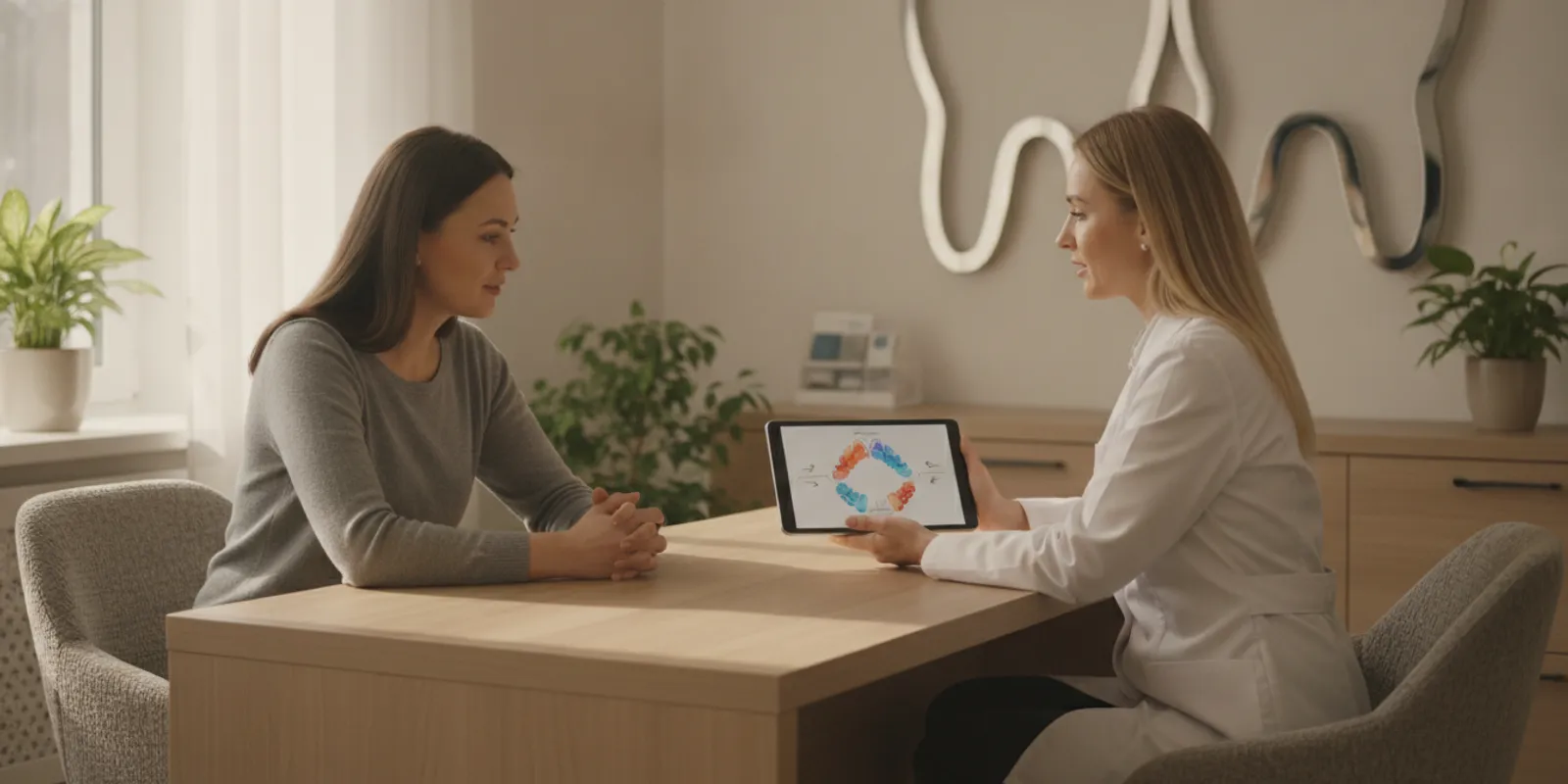
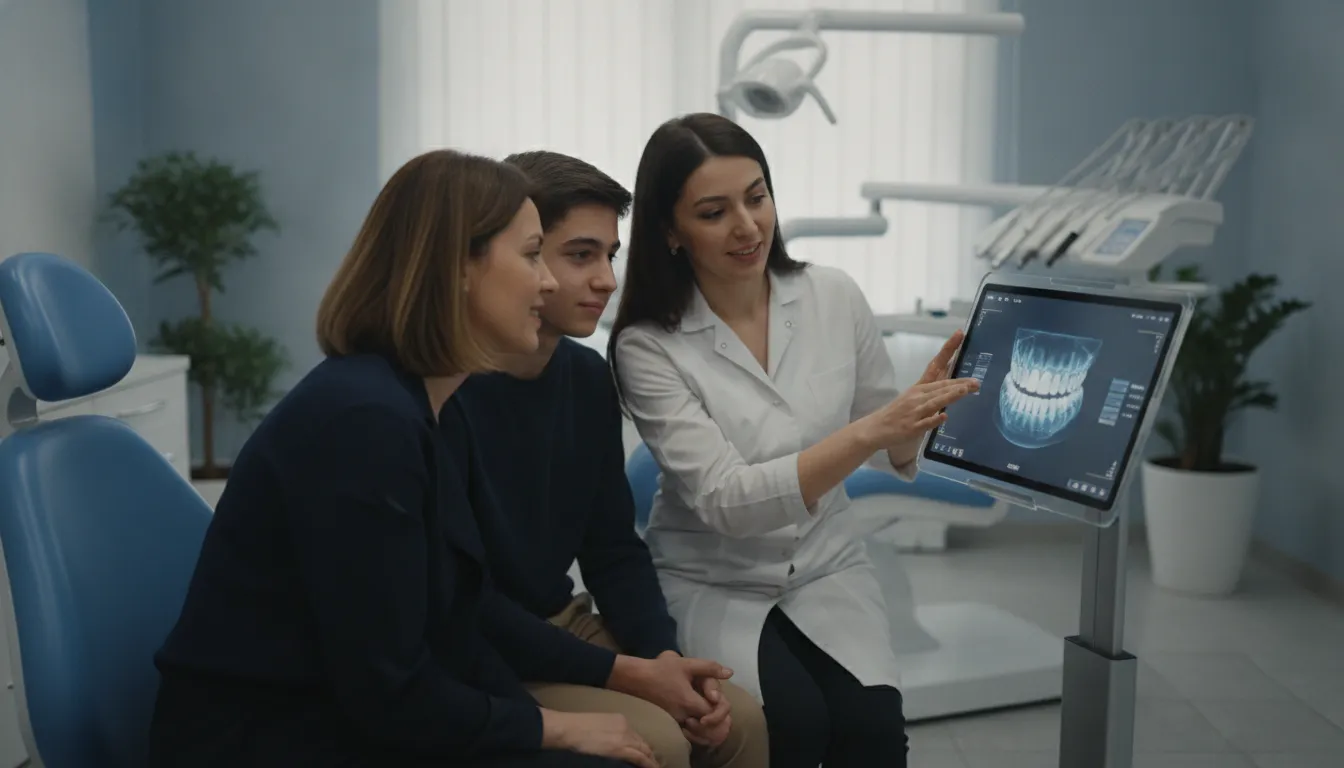
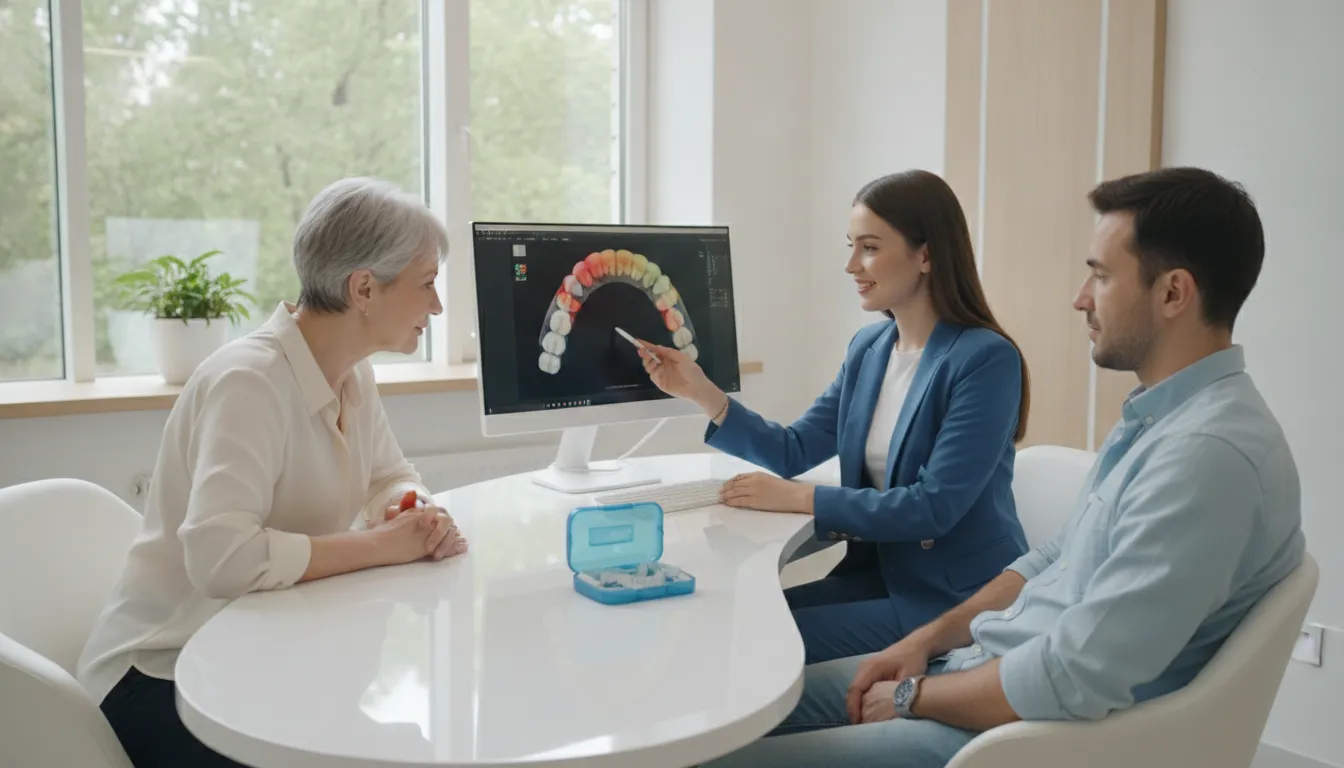
The first visit at Russell Orthodontics includes digital x-rays, digital impressions, diagnostic photos, an iTero scan, and a one-on-one consult with Doc Russell. The scan can also show a preview of a proposed result. None of that preview chooses the appliance by itself.
Ask these questions while you are in the chair:
- If both options can treat my case, which daily step is the one patients like me tend to miss?
- How many hours of wear do you expect, and what happens if a work trip breaks that pattern?
- Which visits must be in the office, and which can be Russell Remote scans?
- What should I do if a tray is lost at work, or if a bracket comes off before a Friday meeting?
You should leave with a recommendation tied to your records and a routine you recognize. If the plan assumes a lunch sink you do not have, say so before you start.
Frequently asked questions
Can I take Invisalign out for a long client lunch?
You can take the trays out to eat. Put them back in when the meal is over. A long gap cuts into the 22-hour wear window the AAO describes for clear aligners, and the next tray can feel tighter if wear time drops.
Will braces make it harder to talk in meetings?
Most people adapt within days. Brackets can rub at first, and wax helps while the cheek toughens. Aligners are more likely to cause a short lisp with a new tray. Mention presentation days so timing of new trays or adjustments can account for them.
Do I have to brush at the office with either option?
Aligners should go back onto clean teeth, so a work brush matters. Braces need careful cleaning around brackets, which is harder to do well in a rush. A small kit in your bag covers both.
Does Russell Remote mean I never come to the office?
No. Russell Remote lets eligible Invisalign patients send scans between visits. Planned in-office visits still happen, and braces adjustments are done in person. Ask which visits your plan still requires.
What if my case needs braces even though I prefer aligners at work?
Then braces are the honest recommendation. Appearance at work is a real factor, and it does not replace the movements your bite needs. You can still plan the food list, the cleaning kit, and the visit calendar around braces.
Bring your real week to the consult
Invisalign vs braces at work comes down to the steps you will repeat: trays out for every meal, or brackets on through every meal. Map those steps onto your meetings, your coffee habit, and your drive between offices. Then let the exam decide which option your teeth can actually use.
Request a complimentary consultation and bring your workweek questions with you. Athens and Watkinsville: (706) 549-0110. Grayson: (770) 236-9660.