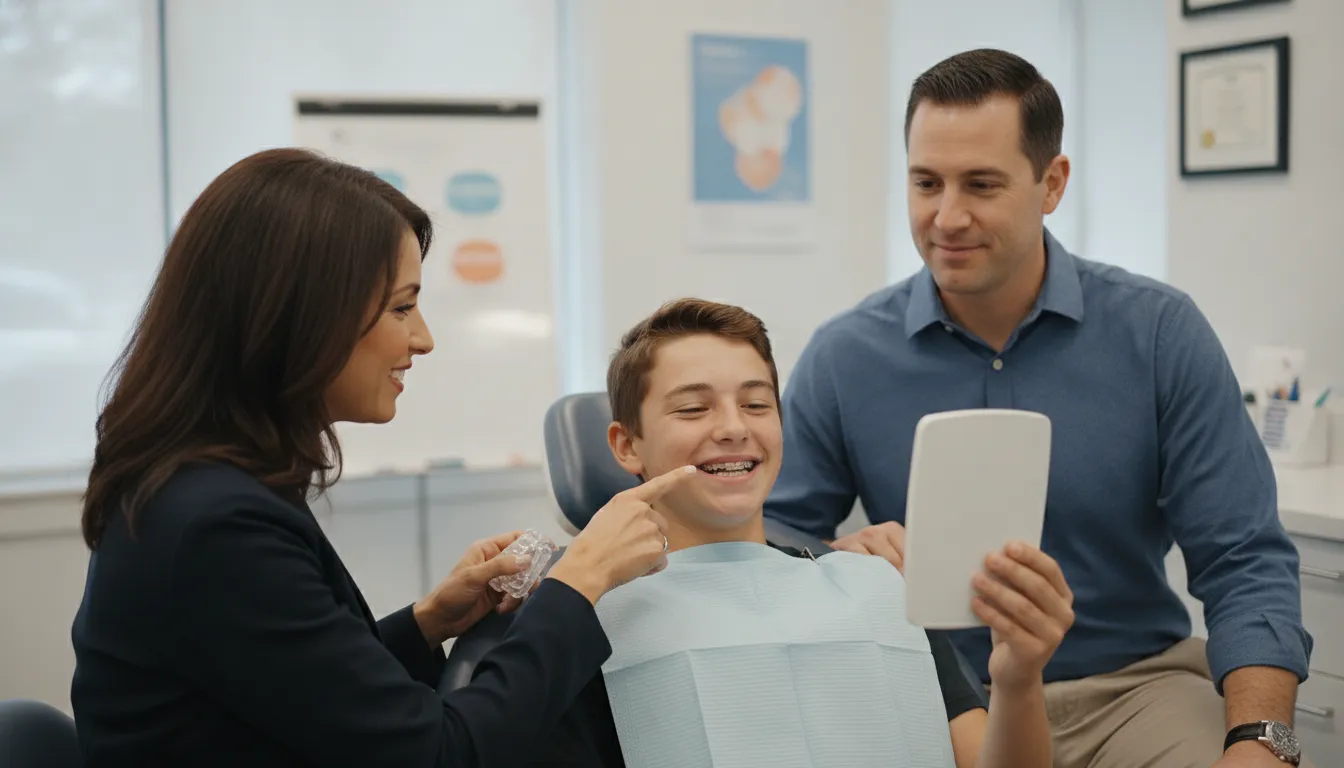
One of the most common myths about Invisalign is that it’s significantly more expensive than traditional braces. The truth is, that’s usually not the case. For most patients, the total cost for Invisalign is very comparable to the cost of braces. This means you can choose your treatment based on what best fits your lifestyle, not just your wallet. Whether you prefer clear aligners or braces, the financial tools available to you are the same. We’ll show you how insurance, financing, and flexible invisalign monthly payments make both options an affordable and accessible path to the smile you’ve always wanted.
Key Takeaways
- Your Cost is Unique to Your Smile: The final price for Invisalign is tailored to your specific treatment plan, not a flat rate. It’s often comparable to traditional braces, so you can choose the best option for your lifestyle, not just your wallet.
- Flexible Payment Options Make Treatment Possible: You can make your new smile affordable by using dental insurance benefits, setting up an interest-free payment plan with your orthodontist, or applying tax-free funds from an HSA or FSA.
- Ask About the Full Investment: To get a complete financial picture, ask what your total fee includes. Be sure to account for the cost of retainers to protect your smile long-term and the value of your provider’s expertise.
How Much Does Invisalign Cost?
One of the first questions on everyone’s mind when considering orthodontic treatment is, “What’s the investment?” It’s a completely valid question, and the answer depends entirely on your unique smile and treatment goals. While I can’t give you an exact number without a consultation, I can walk you through the typical price ranges and payment structures. This will help you understand what to expect and how a beautiful, healthy smile can fit into your budget. The cost of Invisalign is often quite similar to other orthodontic options, making it an accessible choice for many people.
What’s the Total Price Range?
Generally, the total cost for a complete Invisalign treatment falls somewhere between $3,000 and $8,000. This range is broad because every treatment plan is 100% customized. A shorter treatment for minor adjustments will be on the lower end of the scale, while more complex cases requiring longer treatment will be on the higher end. It’s helpful to know that this price point is often comparable to the cost of traditional types of braces. The best way to get a precise quote is to schedule a consultation, where your orthodontist can assess your needs and map out a specific plan just for you.
How Are Monthly Payments Calculated?
Breaking the total cost into monthly payments makes treatment much more manageable. Most patients can expect their monthly payments to be between $100 and $400. The final monthly figure is calculated based on the total cost of your treatment, the amount of your down payment, and the length of your payment plan. If you have dental insurance that covers orthodontics, that will also reduce your monthly payment. Many orthodontic offices, including ours, are committed to creating flexible, interest-free payment plans that work for your financial situation, so you can start your smile journey without stress.
What to Expect for a Down Payment
Most payment plans begin with a down payment, which typically ranges from $500 to $2,500. This initial payment is made at the start of your treatment and is applied directly to your total cost. Think of it as the first step in investing in your new smile. The amount you choose to put down can also affect your monthly payments; a larger down payment will result in a lower monthly bill. When you work with a Top 1% Invisalign Provider, you’re not just paying for aligners, you’re investing in expertise and a predictable, beautiful result. We’ll discuss all of these options with you during your first visit.
What Affects Your Invisalign Cost?
When you start looking into Invisalign, one of the first questions you’ll have is about the price. The truth is, there isn’t a single sticker price for a perfect smile. The total cost of your treatment is tailored to you, just like your aligners. Several key factors come together to determine your final investment, from the specific goals you have for your teeth to the payment options you choose. Understanding these elements will help you get a clearer picture of what to expect and how to plan your budget.
Your Unique Treatment Plan
The most significant factor influencing your Invisalign cost is your personal treatment plan. Every smile is unique, so the complexity of your case and the number of aligners you’ll need will directly shape the price. If you have minor spacing or crowding, your treatment will likely be shorter and require fewer aligners, placing you at the lower end of the cost spectrum. However, more complex issues, like correcting a bite or addressing significant alignment problems, will involve a more extensive treatment plan. This means more aligners and a longer timeline, which naturally increases the overall Invisalign investment.
Your Provider’s Expertise and Location
Where you get your treatment and who provides it also matters. An orthodontist’s office in a major metropolitan area might have different pricing than one in a smaller town. More importantly, the provider’s level of experience is a crucial factor. An orthodontist who is a Top 1% Invisalign Provider has a deep understanding of the system and has successfully treated a high volume of cases, from simple to complex. While their fees might reflect this expertise, you’re paying for the peace of mind that comes with knowing your smile is in the hands of an expert who can achieve predictable, beautiful results efficiently.
Discounts for Paying in Full
How you pay can also change your total cost. Many orthodontic practices offer different payment arrangements to make treatment more accessible. For example, you might find a discount for paying for your entire treatment in full at the beginning. This is a great way to save some money if it fits your budget. It’s also worth asking about other potential savings, like discounts for multiple family members starting treatment at the same time. Don’t hesitate to ask about all available financing options during your consultation to find the plan that works best for you.
Does Dental Insurance Cover Invisalign?
The good news is that many dental insurance plans can help cover the cost of Invisalign, often in the same way they cover traditional braces. If your plan includes orthodontic benefits, you may be able to use that coverage to significantly reduce your out-of-pocket expenses. This makes achieving the smile you’ve always wanted more accessible than you might think. The key is to understand what your specific plan offers. From there, you can create a clear financial roadmap for your treatment.
How to Check Your Orthodontic Benefits
The most straightforward way to determine your coverage is to call your dental insurance provider directly. Be sure to ask about your “lifetime orthodontic maximum,” which is the total amount your plan will pay for orthodontic treatment. If you find the insurance details a bit confusing, you’re not alone. Our team at Russell Orthodontics is here to help. We can review your plan with you and help clarify what your insurance will cover. As an experienced Invisalign doctor, we know how to work with insurance providers to make sure you get the most out of your benefits.
How Much Can Insurance Save You?
While coverage for orthodontic treatment varies widely from one plan to another, the savings can be substantial. On average, insurance might cover up to $3,000 for your treatment. In fact, one study showed that the average insurance coverage for patients was around $1,772. This can make a huge difference in the overall cost of your Invisalign journey. During your consultation, we will provide a complete breakdown of costs and help you understand exactly how much your insurance will save you, ensuring there are no surprises along the way.
How to Finance Your Invisalign Treatment
Seeing the final price tag for orthodontic treatment can feel a little overwhelming, but don’t let it stop you from getting the smile you want. The good news is that you have several great options for making Invisalign fit comfortably into your budget. Most orthodontic offices, including ours, are completely used to helping patients figure out the financial side of things. Think of it as a team effort. We can walk you through setting up in-house payment plans, exploring third-party financing, or using your tax-free health savings accounts to cover the cost. Let’s break down what each of these options looks like.
In-House Payment Plans
One of the most straightforward ways to pay for your treatment is with an in-house payment plan. This is an arrangement you make directly with your orthodontist’s office to spread the total cost over the course of your treatment. Many practices offer these plans with low or even no down payment, which makes it much easier to get started right away. We believe that finances shouldn’t stand in the way of a healthy smile, which is why we work with you to create a payment schedule that feels manageable. It’s a simple, interest-free way to pay for your Invisalign treatment without involving an outside lender.
Third-Party Financing
If you’d prefer to finance your treatment through an outside company, that’s also a popular and effective option. Many orthodontic offices partner with trusted third-party financing companies that specialize in healthcare lending. These companies, like CareCredit, can offer you a loan with low-interest rates and flexible repayment terms that may extend beyond your actual treatment time. This can result in a lower monthly payment, making it an attractive choice for many families. Our team can help you explore these financing options and even guide you through the application process right here in our office.
Using Your HSA or FSA
Do you have a Health Savings Account (HSA) or Flexible Spending Account (FSA) through your employer? If so, you can put that money to work for your new smile. These accounts allow you to set aside pre-tax dollars for qualified medical expenses, and orthodontic care almost always qualifies. Using your HSA or FSA funds is a fantastic way to pay for Invisalign because you’re using tax-free money, which is like getting an automatic discount on your treatment. Be sure to check your account balance and plan details to see how much you have available to use toward your Invisalign aligners.
Is Invisalign More Expensive Than Braces?
It’s one of the first questions on everyone’s mind: which treatment will fit my budget? Many people assume that the advanced technology of Invisalign automatically comes with a higher price tag than traditional braces. The good news is that’s often not the case. The cost for both treatments is surprisingly similar, and your final price depends more on your personal orthodontic needs than on the appliance you choose.
When you break it down, the financial side of getting Invisalign or braces looks very much the same. Let’s walk through how the costs compare.
Invisalign vs. Braces: Total Cost
The total cost for Invisalign treatment is often comparable to the cost of traditional braces. While the exact numbers depend on the complexity and length of your treatment, you’ll find that the price ranges for both options overlap significantly. This means your decision can be based on what fits your lifestyle best, not just your wallet. Whether you prefer the discreet, removable nature of Invisalign or are comfortable with the fixed approach of modern types of braces, you can find an affordable path to your ideal smile. The best way to get a precise quote is to schedule a consultation where an orthodontist can assess your specific needs.
Invisalign vs. Braces: Monthly Payments
Just as the total costs are similar, the monthly payments for Invisalign and braces are also structured in much the same way. After an initial down payment, the remaining balance is typically divided into manageable monthly installments spread across your treatment timeline. For many patients, these payments can range from $100 to $400 per month. The exact amount you’ll pay each month depends on your total treatment cost, your down payment, and the length of your payment plan. Your orthodontic office will work with you to create a payment schedule that feels comfortable for your budget.
Insurance and Financing for Both
Whether you choose Invisalign or braces, you have the same great options for making your treatment affordable. Many dental insurance plans include orthodontic benefits that can significantly reduce your out-of-pocket costs. It’s always a good idea to check your policy details to see what’s covered. Beyond insurance, you can use pre-tax funds from a Health Savings Account (HSA) or Flexible Spending Account (FSA) to pay for your treatment. Most orthodontic practices also offer in-house financing options, often with 0% interest, to help you spread out the cost without extra fees. These financial tools make either choice a viable option for achieving the smile you want.
Are There Other Costs to Consider?
When you receive your Invisalign quote, it’s easy to focus on that main number. But to get a complete picture of your financial commitment, it’s smart to think about what happens during and after your treatment. The initial price typically covers your custom aligners and regular appointments, but a few other items might pop up along the way. Planning for these potential costs from the start helps you create a realistic budget with no surprises, ensuring your journey to a new smile is as smooth as possible. Let’s break down what else you should keep in mind.
Budgeting for Retainers and Follow-Ups
Once your Invisalign treatment is complete, the work isn’t quite over. To protect your beautiful new smile and prevent your teeth from shifting back, you’ll need to wear a retainer. Think of it as insurance for your investment. Most orthodontists recommend wearing one nightly for the long term. The cost of your first set of retainers may or may not be included in your initial treatment fee, and you might need replacements down the road. Be sure to factor this essential long-term care into your overall budget. It’s a small price to pay to maintain your results for a lifetime.
Important Questions to Ask About Fees
Clarity is key when it comes to the cost of your treatment. During your consultation, don’t hesitate to ask specific questions to understand exactly what your payment covers. Your total cost depends on the complexity of your case, so a detailed conversation with a Top 1% Invisalign Provider ensures you get an accurate quote.
Here are a few great questions to ask:
- What does my total treatment fee include? (e.g., aligners, appointments, refinements)
- Is the cost of my first set of retainers included?
- What is the fee if I lose or break an aligner?
- Are there any charges for emergency or after-hours appointments?
Get Started with Invisalign at Russell Orthodontics
Feeling ready to take the next step toward your new smile? We know that understanding the costs and financing is a huge part of the decision, but so is choosing the right team to guide you. At Russell Orthodontics, we combine world-class expertise with a commitment to making your treatment journey smooth, comfortable, and affordable. From your first consultation to your final reveal, we’re here to support you with personalized care that fits your life.
The Value of a Top 1% Invisalign Provider
Choosing the right orthodontist is the most important decision you’ll make in your smile journey. As a Top 1% Invisalign Provider, our team has a level of experience that few practices in the country can match. This distinction means we’ve successfully treated a vast number of cases, from simple to complex, with outstanding results. For you, this translates to a more predictable and efficient treatment process. Dr. Russell designs your customized digital treatment plan using a 3D iTero® scanner and ClinCheck™ software, which ensures every tooth movement is precise and planned for the best possible outcome. You can feel confident knowing your smile is in expert hands.
Our Flexible Payment Options
We believe a beautiful, healthy smile should be within everyone’s reach. That’s why we’re committed to making your treatment affordable. Our team will work with you to create a custom financial plan that makes you and your budget happy. We offer flexible financing with 0% interest through OrthoFi, allowing you to break down the cost into manageable monthly payments with a customized down payment. We also accept FSA and HSA payments to help you make the most of your benefits. Be sure to ask about our pay-in-full and family member discounts to see if you can save even more on the cost of your Invisalign treatment.
Frequently Asked Questions
Why can’t you give me an exact price for Invisalign online? The total cost of Invisalign is 100% unique to you and your smile. The price is based on factors like the complexity of your case and how long your treatment will take. A simple plan for minor adjustments will cost less than a more involved plan for significant bite correction. The only way to get a precise number is to come in for a consultation so we can create a treatment plan tailored specifically to your goals.
Is it true that Invisalign costs about the same as braces? Yes, in most cases, the cost of Invisalign is very similar to the cost of traditional braces. The final price for any orthodontic treatment is determined more by your individual needs (like the length and complexity of your case) than by the specific appliance you choose. This allows you to select the treatment option that best fits your lifestyle without your budget being the deciding factor.
What happens if I lose or break one of my aligners? It’s a common concern, and accidents can happen. The policy for replacing a lost or broken aligner can vary. Sometimes, the cost of a replacement is built into your total treatment fee, while other times there might be a small, separate charge. This is a great question to ask during your initial consultation so you know exactly what to expect and can have total peace of mind during your treatment.
How can I find out how much my dental insurance will actually pay? The best first step is to call your insurance provider and ask specifically about your “lifetime orthodontic maximum.” This is the total amount your plan will contribute to orthodontic care. If you find the details confusing, our team is here to help. We can review your plan with you and submit the necessary paperwork to ensure you get the most out of your benefits.
Besides the aligners, what does the total treatment cost usually include? Your investment covers the entire treatment process, not just the physical aligners. The fee typically includes your initial 3D scan, the customized digital treatment plan designed by the doctor, all of your aligner sets, and all scheduled appointments to monitor your progress. It also often includes any necessary refinements (additional aligners) to ensure your final result is perfect.