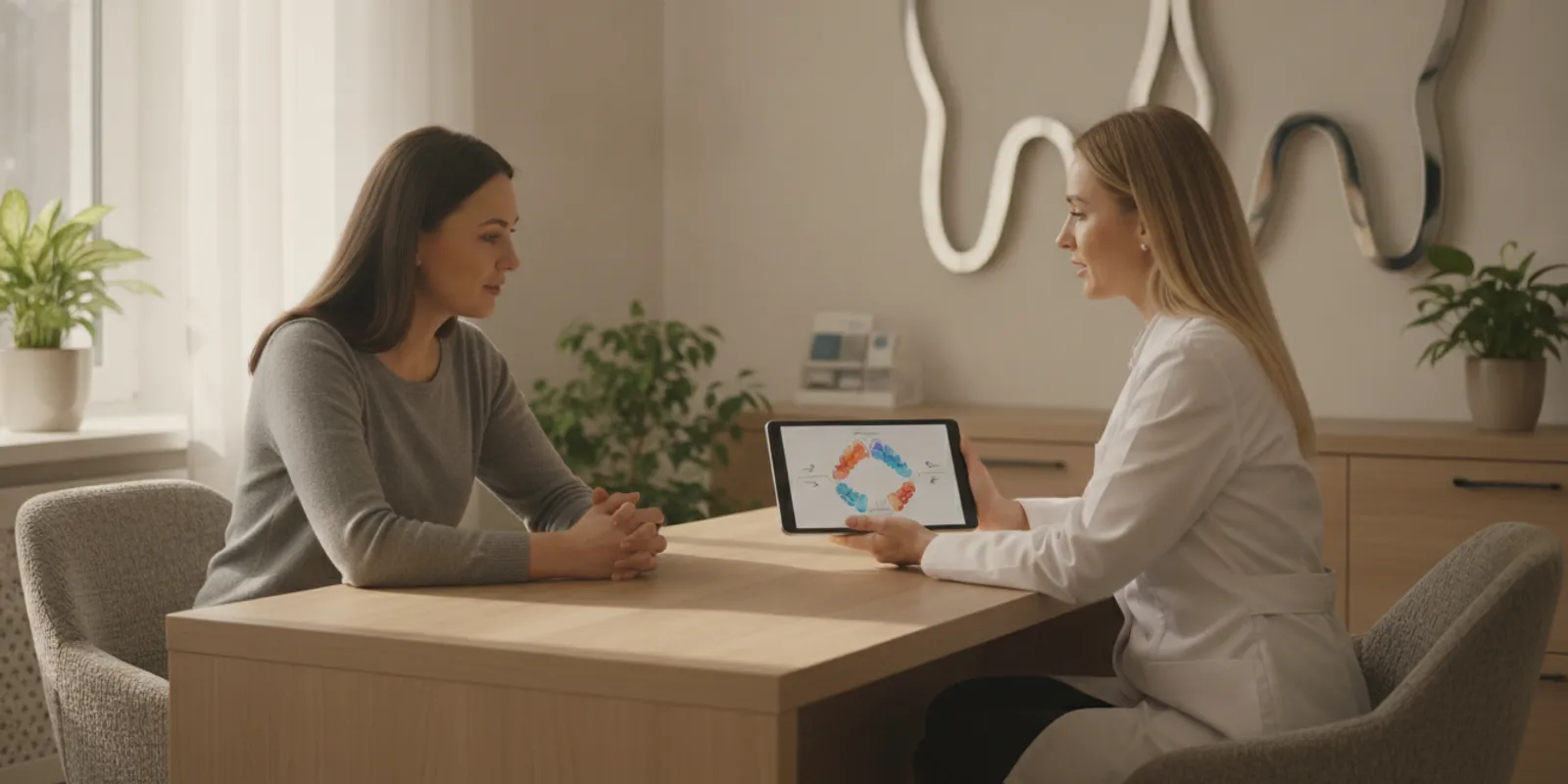
Choosing clear aligner care is about more than finding a provider who offers Invisalign. The right orthodontist should understand how to plan tooth movement, evaluate your bite, and guide your care as your smile changes. That matters whether you are a parent exploring Invisalign First, a teen considering Invisalign Teen, or an adult looking for discreet treatment that fits a busy schedule.
Book your free consultation with Russell Orthodontics to discuss your smile goals.
The best invisalign specialist athens ga patients can choose is an orthodontic provider with deep Invisalign experience. Strong planning technology, sound judgment for complex cases, and consistent clinical oversight. Russell Orthodontics brings more than 20 years of Invisalign experience, current Top 1% Blue Diamond Invisalign Provider status, and technology-enabled care designed around Confidence, Convenience, Choice.
At a free consultation, your candidacy and treatment needs can be evaluated through personal examination, digital scanning, treatment discussion, and visualization. From there, the meaningful differences between specialist care and a basic aligner experience become clearer.
What Makes an Invisalign Specialist Different?
Choosing an Invisalign provider is about more than finding someone who can order clear aligners. The meaningful difference is the depth of clinical experience behind the plan, the provider’s judgment about which movements are realistic, and the level of oversight throughout treatment. A specialist looks at the relationship between your teeth, bite, gums, jaw, and overall goals before recommending a path forward.
Orthodontic care is built around guiding teeth and bites into healthier, more functional positions. Invisalign treatment adds another layer of planning because each sequence of custom aligners must translate a digital design into controlled tooth movement. The provider must decide how to stage that movement, when additional features may be needed, and how to respond if your teeth do not track exactly as expected. Those decisions are not identical for every patient.
Experience that informs treatment judgment
One of the clearest ways to evaluate an Invisalign specialist is to ask how long they have worked with the system and how broad their experience is. Dr. R. Ross Russell began treating Invisalign cases in 2004 and has more than 20 years of Invisalign experience. That depth gives the clinical team a substantial history of planning, monitoring, and refining treatment for different types of patients and orthodontic concerns. You can learn more about Dr. Ross Russell’s Invisalign experience before your visit.
Experience is not a promise that every case will follow the same course. It is a resource for making better-informed decisions. A specialist should be able to explain what Invisalign can reasonably address, what may require a different approach, and how the plan will be adjusted when a patient’s response calls for it. Suitability depends on an individual evaluation, not on a keyword, a photograph, or a standard package.
Personalized planning and ongoing oversight
The specialist distinction also includes what happens after the initial recommendation. Personalized care means connecting the treatment design to your specific bite, priorities, and daily routine, then keeping clinical oversight in place as treatment progresses. At Russell Orthodontics, consultations are described as including a personal evaluation, digital scanning, treatment discussion, and visualization tools. That education-first conversation helps patients and parents understand the proposed direction and ask practical questions before deciding.
Russell Orthodontics describes this approach through Confidence, Convenience, Choice. Patients receive specialist guidance while discussing a plan that fits their needs, rather than being left to interpret a generic aligner experience on their own. For families looking for an Invisalign treatment and specialist care in Athens, the goal is clear communication, careful judgment, and responsible follow-through from consultation through retention.
How an Invisalign Specialist Plans a More Personal Treatment
A confident Invisalign plan starts with understanding the person, not simply scanning the teeth and ordering a series of aligners. During a consultation, the team evaluates your bite, tooth positions, facial balance, goals, and relevant dental history. That evaluation is paired with digital scanning, treatment discussion, and visualization tools, so you can understand what your plan is designed to accomplish before treatment begins.
At Russell Orthodontics, digital radiography helps provide a more complete view of the teeth and supporting structures. An iTero digital scan creates a detailed three-dimensional record without the discomfort of traditional impression material. These records help the orthodontic team study how the teeth fit together and identify the movements that may be needed, rather than relying on a generic sequence.
Turning a scan into a treatment strategy
ClinCheck is used to visualize the proposed stages of treatment. The Outcome Simulator can help patients see how planned tooth movement may affect their smile. These tools are valuable for communication, but they do not replace clinical judgment. The orthodontist reviews the digital plan, checks whether the proposed movements fit your bite and biology, and adjusts the sequence when needed.
That distinction matters because aligners work through biomechanics. Custom-made aligners are shaped to apply forces that guide teeth toward planned positions, as described in a review of clear aligner therapy published by the National Center for Biotechnology Information. The direction, amount, and timing of those forces must be coordinated with the overall bite. A plan focused only on making the front teeth look straighter may overlook the function and stability of the finished result.
Why attachments may be part of the plan
Some patients need small, tooth-colored attachments placed temporarily on selected teeth. These shapes give an aligner additional surfaces to grip. Academic research notes that attachments can assist specific tooth movements and improve aligner retention. They are not a sign that treatment has failed or that aligners are no longer personalized. They are one of the tools an orthodontist may use when a tooth needs more precise control.
Your plan may also be refined as treatment progresses. Clinical review, patient feedback, and updated scans can show whether teeth are tracking as expected. To explore the technology and thinking behind this process, read about the digital Invisalign treatment plan, then learn more about Invisalign treatment and specialist care. The goal is a plan shaped around your needs, with clear explanations and professional oversight at each important decision.
Can an Invisalign Specialist Treat Complex Cases?
Sometimes, yes. But the right answer depends on the orthodontic condition, the health of the teeth and supporting structures, and the type of movement required. A consultation should determine whether Invisalign can address the case predictably, rather than assuming that clear aligners are appropriate for every patient.
Clear aligners can guide teeth through a sequence of planned positions, but they have practical limits. Academic reviews note that severe jaw discrepancies, skeletal issues. Or teeth that must move extensively in multiple directions may exceed the strength and control available from clear aligner therapy. This review of clear aligner therapy explains why case selection matters, while a second academic review emphasizes evaluating indications, limitations, effectiveness, and stability together.
Why complex cases need careful evaluation
“Complex” can describe several different challenges. A patient may have significant crowding, spacing, an overbite, an underbite, a crossbite, or a combination of concerns. Some movements depend primarily on carefully controlled tooth positioning. Others involve the relationship of the jaws themselves. Aligners may be well suited to one situation and less suited to another, even when the visible concern appears similar.
That distinction is why a responsible Invisalign evaluation looks beyond a digital smile preview. The orthodontist needs to understand the bite, tooth positions, facial structure, and the movements needed to reach a healthy result. Patients should also receive a clear explanation of what aligners can accomplish, what may require additional approaches, and how progress will be assessed. Treatment may be appropriate with Invisalign, may require a different orthodontic approach, or may involve referral or surgical discussion in some skeletal cases. Surgery is not always avoidable, and no provider should promise that it will be.
How Russell Orthodontics approaches challenging cases
Russell Orthodontics evaluates and treats complex cases with Invisalign when clinically appropriate. The practice’s approach is grounded in orthodontic judgment, individualized planning, and ongoing clinical oversight. Dr. R. Ross Russell has more than 20 years of Invisalign experience, beginning in 2004, and the practice currently holds Top 1% Blue Diamond Invisalign Provider status. Those credentials do not make every patient a candidate, but they reflect a deep focus on Invisalign care and complex-case evaluation.
During a consultation, the team can perform a personal evaluation, digital scanning, treatment discussion, and visualization. This creates an opportunity to examine the actual bite rather than making a decision from photographs alone. Patients considering Invisalign overbite treatment can learn how their specific bite relationship affects planning and candidacy.
The goal is not to force a complex case into aligners. It is to match the treatment method to the clinical need, with an honest explanation of possibilities and limitations. That education-first process helps patients make a confident decision while preserving the clinical judgment that complex orthodontic care requires.
Invisalign Care for Children, Teens, and Adults
Orthodontic care should fit the patient’s stage of life, not force every family into the same routine. A child may need early attention to growth and developing space. A teenager may be balancing treatment with school, sports, and social activities. An adult may want a discreet approach that works around professional and family responsibilities. Russell Orthodontics offers Invisalign programs for children, teens, and adults, helping families consider care that matches their goals and daily life.
Invisalign First for growing children
For parents of children ages 7 to 12, Invisalign First for children may be considered as part of early orthodontic care. This program is designed for younger patients, with attention to early intervention, growth guidance, and space maintenance. The purpose is not to rush a child into treatment. It is to evaluate how the teeth and jaws are developing and determine whether support at this stage is appropriate.
Parents often want to know how treatment will fit into routines at home. A child may need reminders and encouragement while learning to manage aligners. The orthodontic team can explain the plan in family-friendly terms and help parents understand their role. Suitability depends on an individual evaluation, including the child’s development, orthodontic needs, and ability to participate in care.
Invisalign Teen for school, sports, and growing independence
Invisalign Teen is relevant for families thinking about appearance, compliance support, and an athletic-friendly removable option. Teens can remove aligners for meals and athletic activities, then return them as directed. That flexibility can make orthodontic care easier to manage around classes, practices, performances, and time with friends. Parents remain important partners, while teens can gradually take more ownership of daily habits.
Clear aligners can also address a common concern during adolescence: feeling self-conscious about orthodontic treatment. Their discreet appearance may help a teen feel more comfortable at school or in social settings. The treatment plan still requires professional oversight and consistent participation, so the consultation should cover expectations for both the teen and parent.
Invisalign for adults with full schedules
Adults may be seeking a discreet way to improve their smile while managing work, family, or university responsibilities. Invisalign for adults can be considered for busy professionals, UGA students and staff, and parents who value care that respects their schedules. Families may also appreciate having one orthodontic practice evaluate treatment needs across multiple generations.
Whether care is being considered for a child, teen, or adult, the right starting point is a thoughtful evaluation. Russell Orthodontics serves families in Athens, Grayson, and Watkinsville with an education-first approach, so patients can understand their choices and move forward with confidence, convenience, and choice.
What Ongoing Invisalign Monitoring Looks Like
Clear aligners are custom-made to apply gentle, planned pressure that gradually guides teeth toward their intended positions. Because they are removable for eating and brushing, your daily habits play an important part in keeping the treatment plan on track. Your orthodontic team also needs regular information about fit, movement, and comfort so they can confirm that each stage is progressing as intended. Research on clear aligner therapy describes both the custom design of aligners and their removable, discreet format.
At Russell Orthodontics, the monitoring process is designed to combine personal clinical oversight with practical technology. Your exact instructions come from your treatment plan, but the journey commonly includes these steps:
- Wear each aligner as directed. Keep your aligners in place according to the instructions provided by your clinical team, removing them only as advised for meals, drinking, brushing, and cleaning. Consistent wear helps each aligner deliver the movement it was designed to support. If an aligner is uncomfortable, damaged, or no longer fitting as expected, do not simply abandon the sequence. Contact the team for guidance.
- Change trays according to your clinical plan. Your provider determines when it is appropriate to move to the next aligner. That schedule is individualized, so switching trays should follow your Russell Orthodontics instructions rather than a general calendar found online. Before changing, check that the current aligner is seating as expected and that you understand which tray comes next.
- Share progress through Russell Remote. With Russell Remote virtual monitoring, DentalMonitoring and ScanBox Pro support weekly scans, AI-assisted progress tracking, and review by the clinical team. These check-ins give the team another way to observe how your teeth and aligners are responding between office visits. Technology supports care, but it does not replace professional evaluation or communication.
- Report changes in fit, comfort, or progress. Tell the team if an aligner develops a gap, feels unusually tight, cracks, or stops fitting comfortably. The same applies if you have questions about wear, attachments, cleaning, or moving to the next tray. Prompt communication lets the clinical team determine whether you should continue, repeat a stage, or receive different instructions.
- Attend planned in-office evaluations. Russell Remote materials report a 60-70% reduction in in-office visits, with appointments generally occurring every 12-16 weeks rather than monthly. This is practice-specific guidance, not a universal promise. Your visit rhythm depends on your clinical needs, treatment response, and the plan created for you. In-office care remains an important opportunity for hands-on assessment and any needed adjustments.
This combination of daily participation, weekly information, and scheduled clinical review helps make convenience accountable. The goal is not to manage treatment alone. It is to give you clear support while your orthodontic team stays involved in the decisions that shape your care.
Why Athens Families Choose Russell Orthodontics
Choosing an orthodontic practice is about more than finding clear aligners. Families want a provider who understands the details of Invisalign treatment, explains the plan clearly, and remains involved as the smile changes. Russell Orthodontics brings that specialist focus to patients in Athens and the surrounding communities.
Dr. R. Ross Russell has more than 20 years of Invisalign experience and began treating Invisalign cases in 2004. Russell Orthodontics also holds current Top 1% Blue Diamond Invisalign Provider status. You can learn more about the practice’s current Top 1% Blue Diamond Invisalign Provider status and read about Dr. Ross Russell’s Invisalign experience. These credentials describe experience and current standing, not a promise that every case will have the same treatment plan or result.
| Patient priority | What to look for in specialist care |
|---|---|
| Confidence in the provider | Substantial Invisalign experience, relevant credentials, and a personal evaluation before treatment recommendations. |
| A plan that fits the individual | Personalized planning that considers the bite, tooth movement, treatment goals, and clinical suitability. |
| Choice within a focused experience | DocAligners Experience tiers, including Enhance, Platinum, and Diamond, designed around differing treatment complexity and goals. |
| Care that works with family schedules | Virtual monitoring supported by the clinical team, alongside in-person care when evaluation or treatment requires it. |
| A convenient local relationship | Access to three offices serving Athens, Grayson, and Watkinsville, with care coordinated through the same practice. |
Russell Orthodontics describes its approach through three ideas: Confidence, Convenience, Choice. Confidence comes from personal care and attention from Dr. Russell, along with a treatment discussion grounded in each patient’s evaluation. Convenience includes technology-enabled monitoring for patients who value fewer routine office visits. Russell Remote uses weekly scans, progress tracking, and clinical-team review, so virtual care supports professional oversight rather than replacing it.
The DocAligners structure also gives families a clearer way to talk about what matters to them. Treatment complexity, goals, communication, and convenience can be part of the conversation instead of being reduced to a one-size-fits-all pathway. The right fit begins with understanding the patient’s needs and the provider’s recommended approach.
More than 90% of Russell Orthodontics patients reportedly choose Invisalign over traditional braces. That figure reflects patient preference at this practice, not a guarantee that Invisalign is appropriate for everyone. During an evaluation, families can discuss their goals and learn whether the treatment approach fits their needs. With offices across the region, Russell Orthodontics makes it possible to build that relationship near home, school, or work. Explore the Athens, Grayson, and Watkinsville locations to find the office that works best for your family.
Finding an Invisalign Specialist Athens GA Families Can Trust
Choosing an Invisalign provider is a clinical decision, not just a search for the closest office. Before you begin, ask questions that reveal how carefully your treatment will be evaluated, planned, and monitored. The answers can help you understand whether the practice has the experience and oversight your smile requires.
How much Invisalign experience do you have?
Ask how long the orthodontist has treated Invisalign patients and how that experience informs treatment decisions. Depth matters because aligner therapy involves more than wearing a series of clear trays. An experienced orthodontist can evaluate tooth movement, bite relationships, and the details that make a plan appropriate for your goals. You can also ask who will personally review your plan and oversee your progress. Specialist care should include ongoing clinical judgment, not simply an initial scan followed by automated instructions.
Is my case a good fit for Invisalign?
A responsible provider should explain candidacy clearly rather than promise that every concern can be corrected the same way. Ask how the practice evaluates crowding, spacing, overbites, underbites, crossbites, and jaw relationships. Academic reviews note that severe skeletal discrepancies or cases requiring extensive movement in multiple directions may exceed the limitations of clear aligner therapy. Clear aligner candidacy depends on the individual orthodontic condition, so your evaluation should include a discussion of both possibilities and limitations.
It is also reasonable to ask what happens if your case is more involved than expected. A specialist should describe the clinical factors that shape the recommendation and explain why a particular approach is appropriate for you. At Russell Orthodontics, complex cases may be treated with Invisalign when clinically appropriate, but the decision belongs in a thorough evaluation.
What technology supports my treatment plan?
Ask whether the consultation includes a digital scan, diagnostic records, and a way to visualize the proposed result. At Russell Orthodontics, consultations include a personal evaluation, digital scanning, treatment discussion, and visualization tools. You can ask how those records guide the plan, how attachments or other details may support specific tooth movements, and how changes will be assessed over time.
How will you communicate with me during treatment?
Find out how often your progress is reviewed, who answers questions, and how the practice handles concerns between visits. Ask whether technology-enabled monitoring supplements direct clinical oversight rather than replacing it. Finally, ask what you should expect at the consultation and whether you will have time to make an informed decision. A free consultation should leave you with clear answers, a personalized recommendation, and confidence about your next step.
Book your free consultation to get personalized Invisalign guidance from Russell Orthodontics.
Frequently Asked Questions
Why do some dentists not recommend Invisalign?
Invisalign is not the right fit for every orthodontic condition, and a recommendation should follow a clinical evaluation rather than a one-size-fits-all rule. Complex jaw discrepancies, skeletal concerns, or tooth movements that require extensive movement in several directions may exceed clear aligner limitations. A qualified provider should explain candidacy, alternatives, and the reasoning behind the treatment plan. A clinical review discusses these indications and limitations.
What is the 30 minute rule with Invisalign?
The phrase usually refers to limiting the time aligners are out of your mouth, so they can provide consistent treatment time. Remove them for eating, drinking anything besides water, and brushing, then replace them promptly. Your provider may give you more specific wear guidance based on your plan. Because aligners are removable, building a reliable routine is an important part of treatment.
How do I know whether Invisalign is right for me?
Start with an orthodontic evaluation, not an online checklist. Your provider should assess your bite, tooth positions, jaw relationship, oral health, and treatment goals, then explain whether aligners can move your teeth predictably. At Russell Orthodontics, the consultation is described as including a personal evaluation, digital scan, treatment discussion, and visualization tools. That process helps you understand your candidacy before choosing a treatment approach.
What should I look for in an Invisalign specialist?
Look for depth of Invisalign experience, skill with complex cases, personalized digital planning, and ongoing clinical oversight. Ask who evaluates your progress, how concerns are handled, and what monitoring options are available. The goal is not simply to receive aligners, but to have a qualified orthodontic team guide your care from planning through retention.
Ready to Explore Invisalign Care in Athens?
A thoughtful consultation can help you understand your options, ask questions, and discuss whether Invisalign fits your smile goals. Russell Orthodontics brings an education-first approach to that conversation, with care centered on confidence, convenience, and choice.
Schedule your complimentary consultation with Russell Orthodontics to talk through your goals and next steps.